
Table of Contents
Artificial Intelligence in Industrial Automation: Powering the Next Wave of Smart Manufacturing
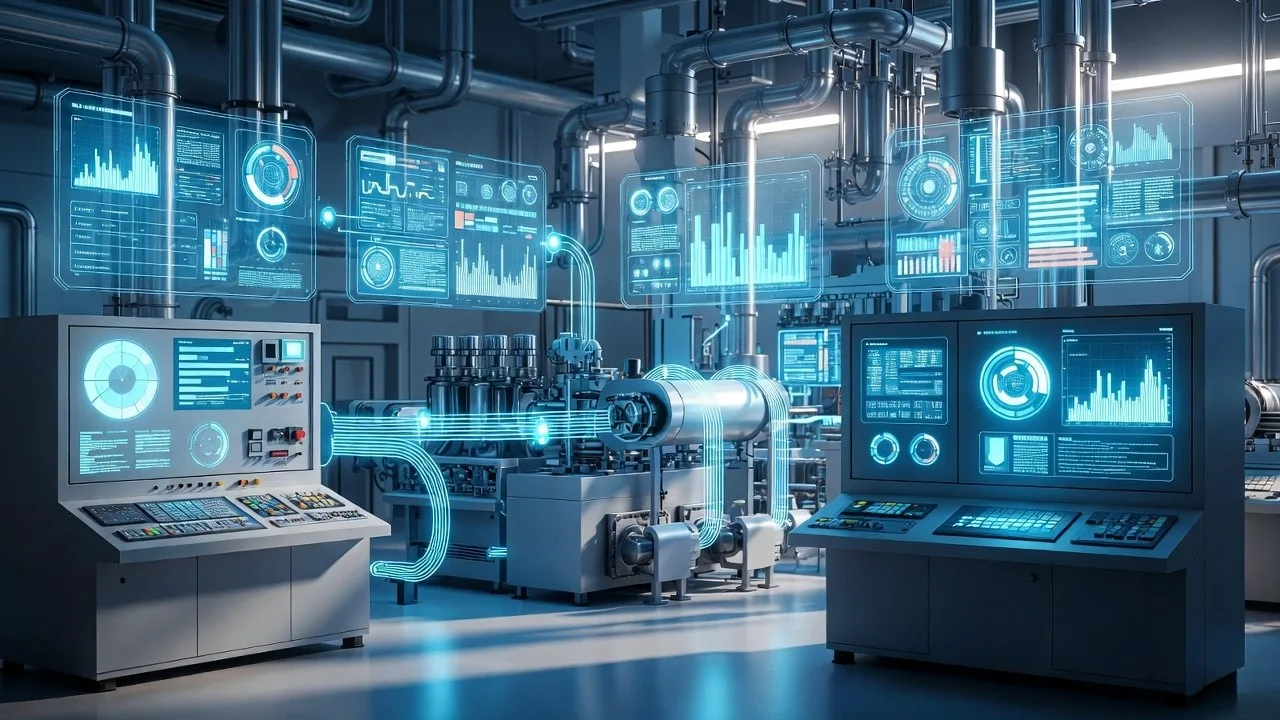
Artificial Intelligence (AI) is redefining how industries operate, optimize, and grow. In the realm of industrial automation, it has become the driving force behind smarter machines, predictive systems, and autonomous processes that learn and improve over time. Across the United States and globally, manufacturers are leveraging AI to enhance productivity, reduce waste, and achieve near-zero downtime in production.
This blog explores how AI is transforming industrial automation, its key benefits, applications, and the future it’s shaping for modern manufacturing.
What Is Industrial Automation with AI?
Industrial automation refers to the use of control systems, sensors, and machinery to perform tasks with minimal human intervention. When integrated with Artificial Intelligence, automation becomes adaptive and intelligent, able to analyze data, predict outcomes, and make autonomous decisions.
In traditional automation, machines follow fixed instructions. With AI, they learn from data, adjust parameters dynamically, and identify inefficiencies before they cause disruption.
AI-powered automation involves technologies like:
- Machine learning (ML): For pattern recognition and predictive maintenance
- Computer vision: For real-time inspection and quality assurance
- Natural language processing (NLP): For human-machine communication
- Edge AI and IoT integration: For faster, localized decision-making
Why AI Is Transforming Industrial Automation
Modern factories are flooded with data from connected devices, sensors, and production lines. AI enables companies to harness this data intelligently, turning it into insights that improve efficiency, reliability, and product quality.
In the U.S., industries such as automotive, aerospace, electronics, and food processing are increasingly adopting AI-driven automation to stay globally competitive.
Key Advantages of AI in Industrial Automation
1. Predictive Maintenance
AI systems can analyze sensor data to predict when equipment is likely to fail. Instead of reacting to breakdowns, manufacturers can schedule maintenance proactively, reducing unplanned downtime and repair costs.
For instance, vibration and temperature sensors combined with machine learning algorithms can forecast motor wear weeks before failure.
2. Enhanced Quality Control
Through computer vision, AI can identify surface defects, color variations, or structural inconsistencies invisible to the human eye.
Unlike manual inspection, AI systems can inspect hundreds of products per minute with near-perfect precision, ensuring consistent quality across production lines.
3. Optimized Production Planning
AI-driven automation software uses real-time data to balance workloads, manage inventory, and optimize scheduling.
In complex manufacturing setups, this reduces bottlenecks and ensures resources—machines, materials, and labor, are used efficiently
4. Energy Efficiency and Cost Reduction
AI can analyze operational data to identify energy-intensive stages of production and suggest optimizations. For example, AI-controlled HVAC or robotic systems can adjust operations dynamically based on production demand, saving both energy and cost.
5. Workplace Safety and Risk Management
AI-powered video analytics can detect unsafe behavior, PPE non-compliance, or equipment malfunctions instantly.
This proactive monitoring prevents accidents and helps companies comply with strict OSHA and environmental regulations in U.S. industries.
6. Autonomous Operations
Advanced factories are moving toward self-learning systems that run with minimal supervision. Robots equipped with AI and computer vision can adapt to product changes on the fly, re configuring tasks such as welding, sorting, or packing without reprogramming.
Real-World Applications of AI in Industrial Automation
| Industry | AI Application | Key Benefit |
|---|---|---|
| Automotive | Predictive maintenance, robotics, quality inspection | Faster production with fewer defects |
| Electronics | AI-based assembly line monitoring | Higher yield and precision |
| Food Processing | Visual inspection and sorting | Consistent product quality and safety |
| Chemical Manufacturing | Process optimization | Reduced energy use and improved output consistency |
| Aerospace | Supply chain and maintenance analytics | Enhanced reliability and operational efficiency |
How AI and IoT Work Together in Automation
AI alone can process data and make intelligent decisions, but when combined with the Internet of Things (IoT), its potential multiplies. IoT sensors collect real-time operational data, from temperature to machine vibration, while AI models interpret it for actionable insights.
This AIoT (Artificial Intelligence of Things) synergy helps manufacturers:
- Monitor production remotely
- Implement predictive maintenance
- Optimize logistics and warehouse management
- Enable closed-loop automation systems
For instance, a smart factory in the U.S. Midwest can use AIoT to automatically adjust assembly line speeds based on live demand data, eliminating overproduction and material waste.
The Future of AI in Industrial Automation
The next generation of automation will be driven by AI agents, autonomous digital workers that continuously learn from factory data and coordinate across departments.
Emerging trends include:
- Generative AI for process design: Automatically generating optimal workflows.
- Digital twins: Simulating production systems to predict performance outcomes.
- Edge AI: Running models directly on devices for faster decisions and lower latency.
- Human-AI collaboration: Where AI assists engineers rather than replaces them.
These advancements will lead to fully adaptive factories that self-optimize in real time, pushing industries closer to Industry 5.0, a model where human creativity and machine intelligence coexist seamlessly.
Conclusion
Artificial Intelligence is not just enhancing industrial automation, it’s redefining it. By combining the precision of machines with the adaptability of AI, manufacturers across the United States are building systems that are smarter, safer, and more sustainable.
The companies that embrace this transformation today will lead tomorrow’s industrial revolution, setting new standards for efficiency, reliability, and innovation.
People Also Ask
What is AI in industrial automation?
AI in industrial automation refers to the integration of artificial intelligence technologies, such as machine learning and computer vision, into manufacturing and production systems to improve performance, accuracy, and decision-making.
How does AI improve manufacturing efficiency?
AI analyzes data from sensors and machines to optimize processes, predict maintenance needs, and automate repetitive tasks, resulting in higher productivity and lower downtime.
What industries benefit most from AI automation?
Automotive, electronics, pharmaceuticals, aerospace, and consumer goods industries are among the leading adopters in the U.S.
Is AI automation expensive to implement?
While initial setup costs can be high, the long-term benefits, reduced downtime, fewer errors, and energy efficiency, usually offset the investment.
What is the future of AI in industrial automation?
The future lies in intelligent, self-learning systems powered by AI agents, digital twins, and edge computing, enabling fully autonomous, adaptive factories.
NunarIQ — The All-in-One AI Agent Platform Driving Efficiency, Precision, and Growth
NunarIQ equips GCC enterprises with AI agents that streamline operations, cut 80% of manual effort, and reclaim more than 80 hours each month, delivering measurable 5× gains in efficiency.
Industries
- Logistics
- Retail
- Manufacturing
- Healthcare
- Finance
- Energy & Resources
Resources
- Blogs
- Whitepaper
- Knowledge Base
- AI Agent Requirement Analysis