
Table of Contents
Automated Contract Negotiation: How AI Is Reshaping the Way Businesses Seal Deals
In today’s fast-moving business landscape, contract negotiation has become a major bottleneck. Legal teams, procurement managers, and sales departments often spend weeks, sometimes months, reviewing terms, comparing clauses, and ensuring compliance. But with AI-driven automation, this once tedious process is undergoing a transformation.
Let’s explore how automated contract negotiation works, why it’s gaining traction, and what it means for enterprises aiming to reduce turnaround times and boost accuracy.
What Is Automated Contract Negotiation?
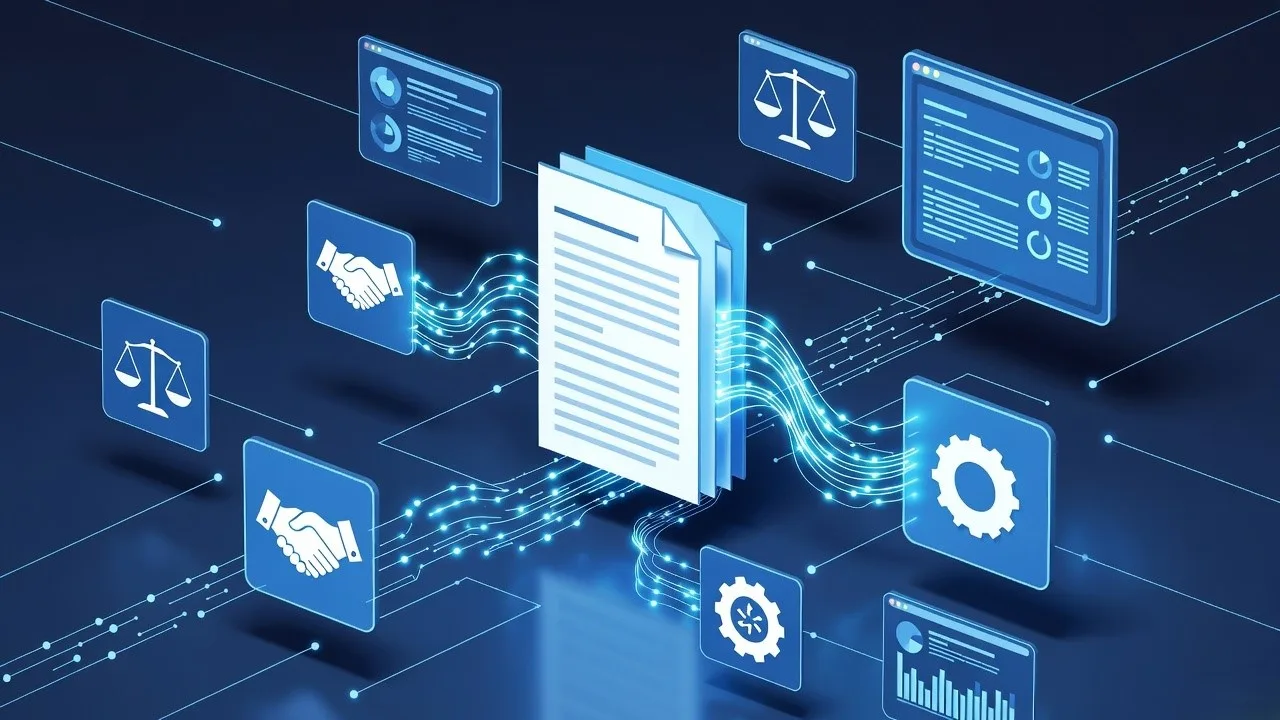
Automated contract negotiation uses artificial intelligence (AI) and natural language processing (NLP) to streamline the process of reviewing, comparing, and approving contracts between parties.
Instead of manually analyzing legal documents line by line, AI tools can:
- Identify key clauses and obligations.
- Suggest optimal terms based on previous agreements.
- Highlight risks or inconsistencies.
- Automatically generate redlines and alternative suggestions.
This allows legal and business teams to focus on strategy rather than paperwork.
Automated Contract Negotiation: How It Works: Step-by-Step Process
- Document Ingestion: The AI system uploads and reads the contract using NLP, breaking it into clauses, sections, and entities for structured analysis.
- Clause Comparison: It matches the current terms against templates, past agreements, or predefined standards.
- Risk Assessment:The model flags deviations, missing clauses, or potentially non-compliant language based on internal or regulatory policies.
- Automated Redlining: AI suggests alternative wordings or edits to align the contract with organizational standards or negotiation objectives.
- Collaborative Workflow: Teams can review and approve AI suggestions, integrate e-signatures, and finalize agreements through automated workflows.
Benefits of Automated Contract Negotiation
- Faster Deal Cycles: Negotiations that once took weeks can now be completed in hours. AI reduces back-and-forth by providing clear, data-backed recommendations.
- Reduced Legal Risk: AI models can be trained to detect high-risk clauses, outdated terms, or compliance gaps, minimizing exposure to legal liabilities.
- Consistency Across Agreements: Automated systems ensure all contracts align with the company’s latest legal policies, pricing models, and business standards.
- Improved Collaboration: Teams across departments, sales, procurement, legal can work in real time on a centralized platform, tracking edits and approvals transparently.
- Data-Driven Insights: AI learns from every negotiation, offering insights into bottlenecks, recurring disputes, or areas for policy improvement.
Use Cases of Automated Contract Negotiation Across Industries
- Procurement: Standardizing supplier contracts and minimizing renegotiation cycles.
- Real Estate: Accelerating lease agreements through clause automation.
- Finance: Ensuring compliance with evolving regulatory frameworks.
- Technology: Managing complex partnership and IP licensing agreements.
- Healthcare: Streamlining vendor and data-sharing contracts under HIPAA compliance.
The Role of Generative AI in Contract Negotiation
Generative AI models are now capable of drafting entire contract sections, rewriting clauses, and creating negotiation-ready drafts based on historical data and desired outcomes. When fine-tuned on an enterprise’s legal library, they can even mimic preferred tone and terminology.
However, human oversight remains essential. AI assists in preparation, but final validation by legal experts ensures that context-specific nuances aren’t lost.
Implementation Considerations of Automated Contract Negotiation
Before deploying automated negotiation systems, organizations should:
- Define standardized templates and clause libraries.
- Integrate AI tools with existing contract lifecycle management (CLM) systems.
- Ensure data security and confidentiality during processing.
- Train teams to review and validate AI outputs.
A well-structured rollout can shorten deal times and free legal teams from repetitive tasks, without compromising on compliance or control.
The ROI of Automated Negotiation
Companies adopting AI-driven contract negotiation report:
- Up to 60% faster contract turnaround times.
- 40% fewer errors in contract language.
- A 30% reduction in administrative costs associated with legal operations.
These improvements not only increase efficiency but also enhance business agility, allowing organizations to act faster in competitive markets.
Conclusion
Automated contract negotiation marks a shift from reactive legal review to proactive, data-driven deal management. By integrating AI and NLP into the negotiation process, companies can reduce friction, accelerate approvals, and maintain better control over compliance.
As generative AI models continue to advance, the vision of fully autonomous contracting, where systems negotiate standard terms and flag only exceptions to humans, may soon become reality.
People Also Ask
What is the difference between automated contract negotiation and contract management?
Contract management oversees the full lifecycle of contracts, while automated negotiation specifically focuses on streamlining and optimizing the negotiation and approval stages.
Can AI completely replace human negotiators?
No. AI handles analysis, comparisons, and drafting, but human judgment remains essential for context, intent, and relationship-based decisions.
Which industries benefit most from automated contract negotiation?
Legal, procurement, IT services, finance, and manufacturing see the strongest ROI due to their high contract volumes and compliance needs.
Is automated contract negotiation secure?
Yes, provided the system follows enterprise-grade encryption and compliance standards like SOC 2, ISO 27001, or GDPR.
How can businesses get started with AI-based negotiation?
Begin with a pilot project focusing on standard contracts, integrate it with your CLM tool, and refine AI models using historical agreements before scaling.
NunarIQ — The All-in-One AI Agent Platform Driving Efficiency, Precision, and Growth
NunarIQ equips GCC enterprises with AI agents that streamline operations, cut 80% of manual effort, and reclaim more than 80 hours each month, delivering measurable 5× gains in efficiency.
Industries
- Logistics
- Retail
- Manufacturing
- Healthcare
- Finance
- Energy & Resources
Resources
- Blogs
- Whitepaper
- Knowledge Base
- AI Agent Requirement Analysis