
Table of Contents
The Turbocharged Future: Digital Transformation in the Transportation Industry
The transportation industry, the backbone of the global economy, is undergoing its most profound transformation since the invention of the container ship. For decades, it was defined by physical assets, trucks, planes, trains, and ships, and manual processes. Today, the core assets are data, algorithms, and connectivity.
Digital Transformation (DT) is not just about adopting a few new gadgets; it is the strategic, fundamental reinvention of business models, operations, and customer experiences through technology. For transportation, DT means shifting from a reactive, cost-center operation to a proactive, data-driven, and highly resilient strategic asset. This transformation is commercially critical, promising massive reductions in operating costs, superior customer service, and the competitive advantage necessary to thrive in the volatile, on-demand global market of the 2020s and beyond.
Pillar 1: The Core Technologies Driving Change
Digital transformation in transportation rests on a foundation of interconnected technologies that enable real-time decision-making and autonomous operations.
1. Artificial Intelligence (AI) and Machine Learning (ML)
AI is the brain of the digital supply chain. It moves the industry beyond basic automation into true intelligent automation.
- Dynamic Route Optimization: AI systems are replacing static route plans by processing immense amounts of real-time data, including live traffic feeds, weather predictions, historical congestion patterns, vehicle capacity, driver hours, and even parking availability at destination. This leads to reduced travel time and fuel consumption (up to 20%) and ensures strict delivery time windows are met.
- Predictive Maintenance: Sensors installed across vehicles (telematics) constantly feed data on engine health, tire pressure, and component wear to ML algorithms. These algorithms can predict potential equipment failures before they occur, allowing maintenance to be scheduled proactively during downtime, which can boost asset availability by up to 30% and cut unexpected repair costs.
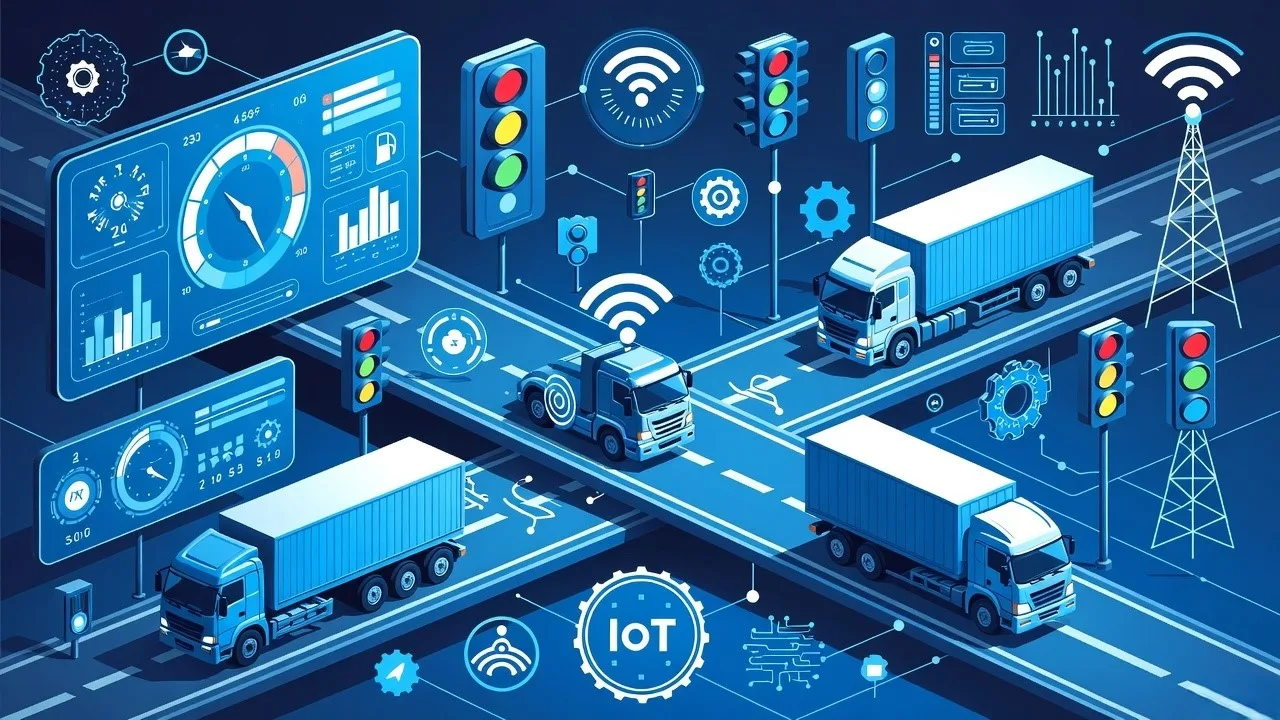
2. Internet of Things (IoT) and Telematics
IoT is the nervous system, providing real-time sensory data from every asset.
- Enhanced Fleet Management: Telematics platforms integrate GPS, engine diagnostics, and sensor data to give fleet managers a 360-degree view of operations. This real-time visibility enables effective driver behavior analysis, spotting unsafe driving habits (hard braking, excessive idling) that waste fuel and cause wear and tear.
- Condition Monitoring: Beyond location, IoT sensors track the condition of sensitive cargo, temperature, humidity, light exposure, and shock. This is vital for pharmaceuticals (cold chain), food, and high-value electronics, ensuring regulatory compliance and reducing cargo loss.
3. Cloud Computing and Data Centrality
Cloud platforms (AWS, Azure, Google Cloud) provide the essential scalable infrastructure required to host and process the massive influx of data generated by AI and IoT.
- Single Source of Truth (SSOT): Cloud systems eliminate fragmented data silos, creating a centralized, real-time repository for all operational, customer, and financial data. This unified view is essential for cross-functional agility.
- Scalability: Cloud-native systems allow transportation companies to scale their computing power instantly to handle extreme peak demand, such as during holiday seasons or sudden market shifts, without massive capital investment in physical servers.
Pillar 2: Operational and Fleet Transformation
Digital transformation fundamentally alters how fleets operate, moving from manual dispatching and reactive maintenance to intelligent, autonomous management.
Dynamic Fleet and Asset Utilization
The days of expensive trucks sitting idle are ending. Digital tools ensure maximum return on asset investment.
- Intelligent Dispatching: Systems use AI to match available capacity, vehicle type, and driver hours with incoming freight, optimizing load factors and ensuring vehicles are fully utilized. This also enables adaptive task allocation, dynamically assigning tasks based on real-time location and remaining service hours.
- Autonomous & Semi-Autonomous Vehicles: While fully driverless trucks are still evolving, partial autonomy (like self-driving platooning systems that reduce drag) and drones for last-mile and yard movements are being implemented. These innovations promise to alleviate the persistent driver shortage challenge and improve safety.
Paperless Operations and Automation
Many administrative logistics tasks remain paper-based and prone to human error. Digital solutions automate these processes.
- Digital Documentation: The use of Blockchain technology is growing to create an immutable, transparent, and instantly verifiable record of shipping documents, customs forms, and bills of lading. This dramatically speeds up cross-border transactions and reduces fraud.
- Automated Back-Office: AI-powered solutions are automating routine back-office functions like invoice processing, rate management, and compliance reporting, leading to significant reductions in administrative labor costs.
Pillar 3: The Customer Experience Revolution
Digital transformation places the customer at the center, redefining service expectations in an on-demand economy.
360-Degree Visibility and Transparency
Customers, both B2B and B2C now demand the same level of tracking accuracy for a container ship as they do for a pizza delivery.
- Real-Time Tracking & P-ETAs: Modern platforms offer granular, minute-by-minute tracking across all transport modes (multimodal). Crucially, they use Predictive Estimated Time of Arrival (P-ETA), constantly updating the customer with accurate expectations based on live conditions, enhancing trust and reducing support calls.
- Self-Service Portals: Digital customer portals provide instant access to tracking, documentation, and communication tools. AI-powered chatbots offer 24/7 self-service support, handling common queries instantly and diverting human staff to complex problem-solving.
Mobility-as-a-Service (MaaS)
In the passenger transport sector, DT is manifesting as MaaS. This concept integrates various forms of transport (public transit, ride-sharing, bike-sharing, and taxis) into a single, unified digital service accessible via a single app.
- Users can plan, book, and pay for entire journeys seamlessly, optimizing convenience and pushing urban mobility toward integrated, sustainable models.
Commercial Benefits: Why Digital Transformation is a Must
For commercial transportation companies, digital transformation is not optional, it is a competitive necessity that directly impacts profitability.
- Significant Cost Reduction: By optimizing routes, minimizing idling time, enabling predictive maintenance, and automating back-office tasks, businesses typically see cost savings of 15% to 30% across their operational expenses.
- Increased Resilience and Risk Mitigation: The use of AI and Digital Twins for scenario planning allows companies to anticipate major disruptions (port strikes, extreme weather) and execute pre-approved mitigation strategies automatically. Companies using predictive analytics can reduce supply chain disruptions by up to 60%.
- Sustainability and Compliance: Digital tools enable Green Logistics. Optimized routing and efficient asset utilization directly reduce fuel consumption and carbon emissions (up to 25%). Furthermore, digital tracking of Scope 3 emissions helps companies meet stringent global ESG (Environmental, Social, and Governance) requirements, turning sustainability into a competitive factor.
- Market Growth and Scalability: Cloud architecture and automated processes provide the necessary scalability to handle rapidly growing e-commerce volumes and enter new service areas (like last-mile delivery or specialized freight) faster than non-digitized competitors.
The Path Forward: Strategy Over Technology
Successful digital transformation hinges not just on acquiring technology but on a strategic cultural shift.
Companies must:
- Develop a Robust Data Strategy: View data as the most valuable asset, implementing cloud systems and governance policies to ensure data is clean, integrated, and accessible across the enterprise.
- Focus on Upskilling the Workforce: The new transportation employee is a supervisor of AI, not a manual processor. Comprehensive training programs are needed to transition the workforce from manual operators to data analysts, system managers, and robotics technicians.
- Prioritize Cybersecurity: As all systems become interconnected via the cloud and APIs, the risk of cyberattack increases. Robust security protocols must be embedded into every new digital system to protect sensitive operational and customer data.
The digital transformation of the transportation industry is the journey from physical assets as the primary value driver to intelligent networks that manage and optimize those assets. Companies that make this strategic leap will be the ones that own the future of mobility and logistics.
People Also Ask
What are the three core technologies driving DT in transportation?
The core drivers are Artificial Intelligence (AI) for intelligent decision-making, the Internet of Things (IoT) for real-time sensing/tracking, and Cloud Computing for scalable, centralized data infrastructure.
What is the commercial benefit of AI-driven route optimization?
AI optimization minimizes travel time, fuel consumption, and labor costs, leading to cost savings of up to 20% and allowing companies to meet tight delivery windows more reliably, improving customer satisfaction.
How does the Digital Twin concept help fleet managers?
The Digital Twin is a virtual, live replica of the supply chain/fleet. It allows managers to test “What If” scenarios (e.g., rerouting) and identify operational bottlenecks without impacting real-world operations.
What is the primary role of Predictive Maintenance?
Using IoT sensor data and ML algorithms, Predictive Maintenance predicts equipment failure (e.g., engine or tire issues) before it happens, allowing maintenance to be scheduled proactively, which reduces unexpected downtime and repair costs.
What is the biggest non-technology challenge in implementing DT?
Workforce upskilling and change management. Companies must train employees to shift from manual roles to supervisory roles that manage AI systems, analyze data, and maintain new technology.
NunarIQ — The All-in-One AI Agent Platform Driving Efficiency, Precision, and Growth
NunarIQ equips GCC enterprises with AI agents that streamline operations, cut 80% of manual effort, and reclaim more than 80 hours each month, delivering measurable 5× gains in efficiency.
Industries
- Logistics
- Retail
- Manufacturing
- Healthcare
- Finance
- Energy & Resources
Resources
- Blogs
- Whitepaper
- Knowledge Base
- AI Agent Requirement Analysis