
Table of Contents
Real-Time Safety Monitoring in US Manufacturing: The AI Agent Revolution
In a Texas chemical plant, a network of AI agents scans live video feeds, identifying a worker approaching a restricted zone without proper protective gear. Before a supervisor can react, the system triggers an on-site alarm and sends a mobile alert, preventing a potential incident. This isn’t a future vision, it’s happening today, and within just two weeks of implementation, this facility reduced near-miss incidents by 48% and improved hazard response times by 65% .
The landscape of industrial safety in the United States is undergoing its most significant transformation in decades. As an AI agent development company with over 500 production deployments across US manufacturing facilities, we’ve witnessed firsthand how autonomous AI systems are moving safety from reactive compliance to proactive protection. The market reflects this shift: the AI in manufacturing sector is projected to soar from $34.18 billion in 2025 to $155.04 billion by 2030, achieving a remarkable 35.3% CAGR .
Real-time safety monitoring in US manufacturing uses autonomous AI agents with computer vision and sensor integration to proactively identify hazards, prevent incidents, and ensure compliance across factory floors.
What is AI-Powered Real-Time Safety Monitoring?
Traditional safety monitoring in manufacturing has largely been reactive—depending on manual inspections, periodic audits, and incident investigations. While these methods have their place, they share a critical limitation: they identify problems after they occur. AI-powered real-time safety monitoring flips this paradigm entirely.
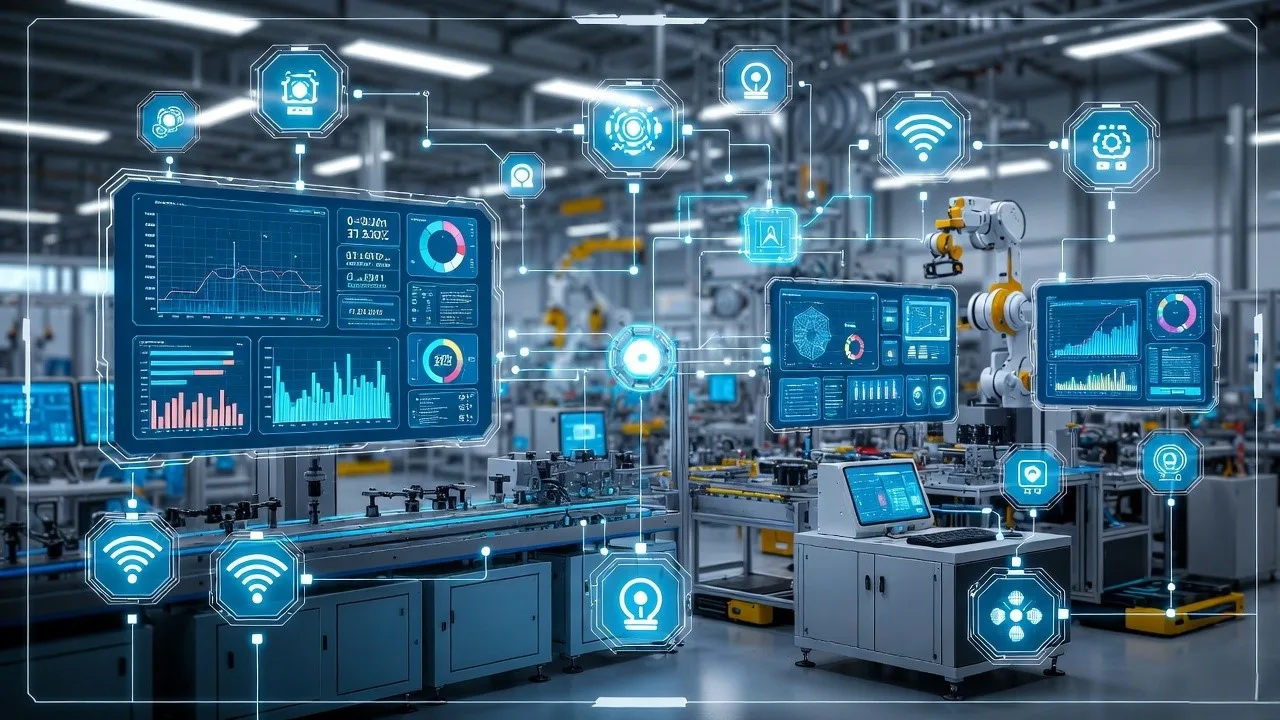
Real-time safety monitoring leverages autonomous AI agents equipped with computer vision, sensor fusion, and predictive analytics to continuously scan manufacturing environments for potential hazards. These systems don’t just record footage—they understand what they’re seeing, interpret context, and trigger immediate interventions when detecting safety violations or emerging risks .
From our experience deploying over 500 AI agents in production environments, the most effective systems share three core capabilities:
- Continuous Environmental Awareness: Using existing CCTV infrastructure combined with IoT sensors, these systems maintain uninterrupted vigilance across facilities, detecting subtle risk patterns human observers might miss during long monitoring sessions .
- Contextual Understanding: Advanced computer vision distinguishes between normal operations and genuine safety concerns—recognizing the difference between a worker briefly passing near a hazardous zone versus one conducting extended work in a dangerous area .
- Automated Intervention Systems: Upon detecting risks, these AI agents don’t just alert security desks—they trigger multiple response protocols simultaneously, from on-site audio warnings to mobile notifications for safety officers, creating a layered defense system .
The Business Case for Real-Time Safety Monitoring in US Manufacturing
Beyond the obvious moral imperative of protecting workers, real-time safety monitoring delivers quantifiable financial and operational benefits that justify the investment. The business case has become increasingly compelling as technology costs decrease and implementation timelines shorten.
Major manufacturers are reporting extraordinary results from their AI safety implementations. One global steel manufacturer achieved a 90% reduction in total safety alerts and a 92% decrease in near-traverse alerts after implementing an AI-powered monitoring system. Perhaps more impressively, they reduced PPE non-compliance alerts by 73% and truck wheel blockade violations by 77% .
The financial implications of these improvements are substantial. McKinsey research indicates that AI-driven predictive maintenance alone can reduce machine downtime by up to 50% and extend machine life by 20% to 40% . When applied specifically to safety monitoring, the benefits extend across multiple dimensions:
- Incident Cost Reduction: The National Safety Council estimates the average cost of a serious workplace injury exceeds $100,000 when accounting for medical expenses, lost productivity, and administrative costs. Preventing even a handful of incidents delivers rapid ROI .
- Regulatory Compliance: With OSHA penalties increasing annually, automated compliance monitoring significantly reduces violation risks. The AI systems provide comprehensive documentation of safety initiatives and incident prevention efforts .
- Operational Efficiency: Manufacturers using AI safety systems report spending 40% less time on manual safety inspections, freeing safety professionals for more strategic initiatives .
- Insurance Premium Reduction: As incident rates decline, manufacturers often negotiate significantly lower workers’ compensation premiums, creating recurring annual savings .
Key Technologies Powering Modern Safety Monitoring Systems
Computer Vision and Deep Learning
At the core of modern safety monitoring systems lie advanced computer vision algorithms capable of interpreting visual data with human-like understanding—and in some cases, surpassing human capabilities. These deep learning models are trained on millions of industrial images to recognize safety violations, hazardous conditions, and near-miss events .
The technology has evolved beyond simple object detection. Today’s systems understand complex scenarios: distinguishing between authorized and unauthorized personnel in restricted zones, identifying subtle equipment malfunctions that precede failures, and detecting fatigue-related behaviors in workers before they lead to incidents .
From our deployment experience, the most effective computer vision applications in US manufacturing facilities include:
- PPE Compliance Detection: Real-time verification of hard hats, safety glasses, high-visibility vests, and respiratory protection usage .
- Restricted Zone Monitoring: Continuous surveillance of hazardous areas, with immediate alerts when unauthorized personnel enter dangerous zones .
- Vehicle and Pedestrian Interaction: Detection of unsafe proximity between workers and moving equipment like forklifts, preventing collision incidents .
- Ergonomic Risk Identification: Monitoring for potentially harmful body positions or movements that could lead to musculoskeletal disorders .
Sensor Fusion and IoT Integration
While computer vision provides crucial visual context, the most robust safety monitoring systems integrate multiple data streams through sensor fusion. By combining visual data with information from environmental sensors, equipment monitors, and wearable devices, AI agents develop a comprehensive understanding of workplace safety conditions .
Modern manufacturing facilities deploy networks of IoT sensors that track everything from air quality and temperature to equipment vibration and noise levels. When integrated with visual monitoring systems, these data streams enable predictive safety interventions—identifying potentially hazardous conditions before they manifest as immediate threats .
The proliferation of industrial IoT is staggering: Statista reports that the number of IoT-connected devices is expected to reach 75.44 billion worldwide by 2025, creating unprecedented opportunities for safety monitoring systems to access real-time operational data .
Edge Computing for Real-Time Processing
In safety-critical applications, response time is non-negotiable. Cloud-based processing introduces latency that could mean the difference between prevention and incident. Edge computing brings computational power directly to the factory floor, enabling real-time analysis and immediate response to detected hazards .
Modern GPUs can process AI workloads up to 50 times faster than traditional CPUs, making complex real-time analytics practical even in large facilities with multiple video streams . This processing speed is essential for applications like:
- Immediate Intervention: Triggering alarms or equipment shutdown within milliseconds of detecting a safety violation .
- Bandwidth Optimization: Reducing network load by processing video footage locally and transmitting only alert metadata and relevant video clips .
- Offline Operation: Maintaining safety monitoring capabilities even during network outages, crucial for continuous protection .
Implementation Framework for US Manufacturers
Assessment and Planning
Successful implementation begins with a comprehensive assessment of existing safety challenges and infrastructure. Through our experience with hundreds of deployments, we’ve found that manufacturers who dedicate appropriate time to this phase achieve significantly better outcomes.
The assessment process should include:
- Infrastructure Audit: Evaluation of existing CCTV systems, network capabilities, and sensor coverage to determine what can be leveraged versus what requires upgrading .
- Risk Prioritization: Identification of highest-impact safety scenarios based on historical incident data, near-miss reports, and worker feedback .
- Use Case Selection: Choosing initial AI safety scenarios that address the most critical risks while demonstrating clear value to build organizational support .
A typical assessment and planning phase requires approximately three days for a medium-sized manufacturing facility, though complex environments may need additional time .
Deployment and Integration
The deployment phase focuses on configuring AI models, integrating with existing systems, and establishing alert protocols. Modern AI platforms can typically be deployed within two weeks, significantly faster than traditional safety systems .
Critical deployment activities include:
- AI Model Configuration: Customizing detection parameters for facility-specific risks and operational contexts .
- System Integration: Connecting with existing camera infrastructure, sensor networks, and communication systems without disrupting operations .
- Alert System Setup: Establishing multi-channel notification protocols including mobile alerts, email notifications, and on-site alarms .
- User Training: Ensuring safety personnel and relevant operators understand how to interpret and respond to system alerts .
The rapid deployment timeline is possible because modern solutions leverage existing infrastructure most facilities require no additional hardware investments beyond their current CCTV systems .
Optimization and Scaling
Post-deployment optimization is where manufacturers extract maximum value from their AI safety investments. The most successful implementations treat initial deployments as foundations for continuous improvement rather than one-time projects.
Optimization activities include:
- Performance Monitoring: Tracking detection accuracy, false positive rates, and response effectiveness to refine system parameters .
- Workflow Integration: Embedding AI safety insights into existing safety processes, from daily briefings to management reviews .
- Expansion Planning: Identifying additional use cases and areas for deployment based on initial success and evolving safety needs .
Manufacturers who systematically optimize and scale their AI safety systems typically achieve 120% increases in recorded safety incidents within the first two weeks not because more incidents occur, but because previously unnoticed safety issues are captured .
Measuring ROI and Performance Metrics
Quantifying the return on safety investments has traditionally been challenging, but AI-powered systems provide unprecedented data for measuring impact. The most sophisticated manufacturers track both leading and lagging indicators to build a comprehensive picture of safety performance.
Leading indicators proactive measures that predict safety performance include:
- Alert Reduction Rates: Decreasing frequency of safety violations indicates improving compliance .
- Response Time Improvements: Faster intervention in hazardous situations prevents escalation .
- Near-Miss Detection: Increased identification of near-miss events provides opportunities for preventive action .
Lagging indicators, reactive measures of safety performance—include:
- Incident Rate Reduction: Decreases in recordable injuries and safety incidents .
- Cost Savings: Reduction in workers’ compensation claims, equipment damage, and regulatory penalties .
- Operational Impact: Decreases in safety-related downtime and improvements in overall equipment effectiveness .
One chemical manufacturer reported a 35% reduction in emergency shutdowns due to safety concerns after implementing AI monitoring, demonstrating how safety improvements directly impact operational continuity .
People Also Ask
How much does implementing AI safety monitoring cost?
Implementation costs vary significantly based on facility size and existing infrastructure, but modern solutions that leverage current CCTV systems can deploy with minimal hardware investment, focusing costs on software and configuration .
Can AI safety systems integrate with existing equipment?
Yes, most AI safety monitoring platforms designed for manufacturing integrate directly with existing CCTV infrastructure, sensor networks, and communication systems without requiring expensive hardware upgrades .
NunarIQ — The All-in-One AI Agent Platform Driving Efficiency, Precision, and Growth
NunarIQ equips GCC enterprises with AI agents that streamline operations, cut 80% of manual effort, and reclaim more than 80 hours each month, delivering measurable 5× gains in efficiency.
Industries
- Logistics
- Retail
- Manufacturing
- Healthcare
- Finance
- Energy & Resources
Resources
- Blogs
- Whitepaper
- Knowledge Base
- AI Agent Requirement Analysis