
Table of Contents
Supply Chain Control Tower Dashboard: The AI Nerve Center for Modern Logistics
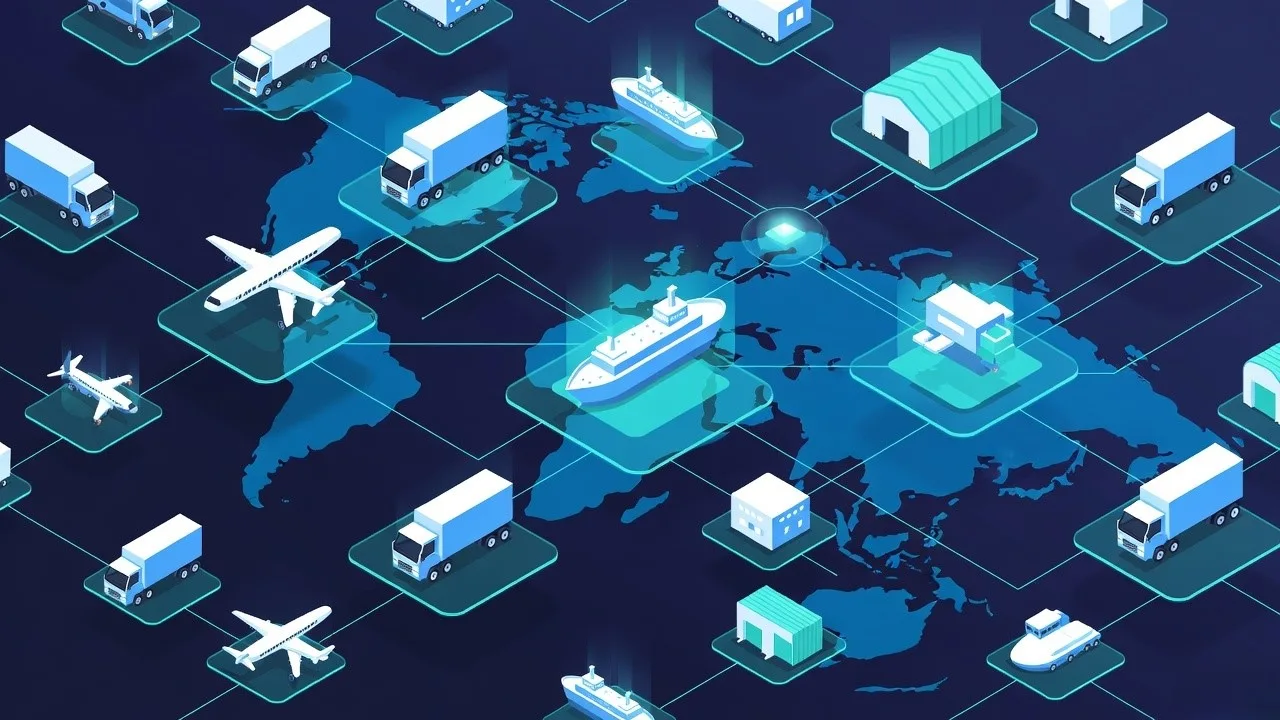
A supply chain control tower dashboard is a centralized AI-powered platform that provides real-time visibility, predictive alerts, and decision-support capabilities to optimize logistics operations and drive significant cost savings.
Having developed and deployed over 500 AI agents into production for logistics clients across the United States, my team has consistently observed a pivotal truth: data alone is not power. The power lies in a centralized, intelligent command center that transforms fragmented data into decisive action. For U.S. logistics leaders grappling with unprecedented disruptions and complexity, the AI-powered supply chain control tower dashboard has evolved from a luxury to a critical operational spine.
See Your Entire Supply Chain in One Dashboard
Gain real-time visibility, predictive alerts, and smarter decisions with a custom-built control tower.
👉 Book a Free Strategy SessionWhat is a Supply Chain Control Tower Dashboard?
Many logistics managers mistakenly believe a control tower is merely a dashboard for tracking shipments. In reality, it is a fundamental capability that combines people, processes, and technology. Gartner defines it as a concept that brings these elements together to capture near-real-time data and improve decision-making . It is, essentially, an air traffic control system for your entire supply chain .
From our perspective as an AI development company, the dashboard is the visual interface of this system, the “brain” of the operation. It integrates data from various sources—your ERP, Transportation Management System (TMS), Warehouse Management System (WMS), supplier portals, and live IoT sensors, into a single source of truth . For our U.S.-based clients, this often means consolidating information from dozens of ports, hundreds of carriers, and thousands of shipments into one coherent, actionable view.
A true control tower operates on a continuous intelligence cycle:
- See: “Where are my goods right now?” – Providing real-time, end-to-end visibility .
- Anticipate: “What might happen?” – Using predictive analytics to forecast disruptions .
- Understand: “So what?” – Analyzing the impact of those forecasts on the business .
- Act: “Now what?” – Enabling proactive orchestration and response .
- Learn: “Then what?” – Using historical data to continuously improve processes .
This transforms the supply chain from a reactive cost center to a proactive, strategic asset.
Supply Chain Control Tower Benefits
The strategic implementation of a control tower dashboard delivers a compelling return on investment, quantified across financial, operational, and strategic dimensions. At Nunar, we’ve observed that companies leveraging our AI-powered dashboards consistently achieve outsized results.
1. Financial Value and Cost Optimization
The financial impact is direct and significant. Companies that have adopted true control towers have realized :
- A reduction in logistics costs by 3-5% through optimized routes and carrier selection.
- A 5-15% reduction in inventory by improving inventory turnover and optimizing safety stock levels.
- Labor efficiency improvements of 10-20% by automating manual tracking and reporting tasks.
- Revenue increase of up to 1% through reduced lost sales from stockouts.
2. End-to-End Visibility and Proactive Management
This is the cornerstone benefit. A control tower dashboard provides a panoramic view from the supplier’s supplier to the end customer . For a U.S. manufacturer, this means tracking a raw material from a Southeast Asian factory, across the ocean to a port in Long Beach, through a Chicago warehouse, and finally to a production line in Ohio. This transparency allows you to move from fire-fighting to fire-prevention. You can see a potential delay, such as a vessel running behind schedule or a truck stuck in traffic, and act before it becomes a crisis.
Struggling With Disconnected Supply Chain Data?
Let our experts show you how a unified dashboard can integrate all your systems seamlessly.
🚀 Request a Live Demo3. Enhanced Customer Service and Satisfaction
In logistics, your performance directly impacts your customer’s experience. A control tower enables you to deliver on your promises. With capabilities like improved on-time delivery, accurate tracking, and proactive communication, you win customer trust. Studies show that optimized, data-driven supply chains can achieve 25% faster order-to-delivery cycles , a critical advantage in the age of Amazon Prime.
4. Improved Resilience and Risk Mitigation
The last few years have taught every logistics professional the importance of resilience. A control tower dashboard builds this resilience by providing the data needed to navigate disruptions. When a hurricane closes a port or a supplier faces a shutdown, the dashboard allows you to quickly assess the impact on your network and run “what-if” scenarios to evaluate alternative routes or suppliers, minimizing downtime and revenue loss .
Essential Supply Chain Control Tower Metrics
A dashboard is only as good as the metrics it tracks. To avoid “analysis paralysis,” focus on these critical KPIs that provide a holistic view of your supply chain health. Based on our work with hundreds of clients, we recommend categorizing and prioritizing the following metrics.
Table: Essential Supply Chain Control Tower KPIs
Operational vs. Strategic Metrics
It’s crucial to track metrics across different time horizons to manage both daily execution and long-term strategy .
- Operational Metrics are your day-to-day pulse. These are real-time alerts on shipment status, warehouse throughput, and immediate inventory levels. They answer the question, “Are we executing today’s plan effectively?” .
- Tactical Metrics look at trends over weeks or months. They include supplier performance analysis, transportation cost per lane, and customer satisfaction scores. They help you refine processes and planning .
- Strategic Metrics are the big-picture indicators. They include total supply chain cost as a percentage of revenue, supply chain flexibility, and sustainability metrics like carbon emissions. These KPIs determine if your supply chain is aligned with your company’s long-term goals .
How AI Agents Power the Modern Control Tower
At Nunar, we don’t just build dashboards; we build intelligent command centers. The key differentiator of a modern control tower is the deployment of specialized AI agents that automate and enhance decision-making. These are not simple scripts but autonomous systems that learn and adapt.
1. Predictive Disruption Agents
These agents analyze real-time data streams—including GPS, weather reports, port congestion data, and news feeds—to predict potential delays before they occur. For example, one of our AI agents deployed for a national retailer analyzes over 15 data points per shipment and can predict a delay with over 90% accuracy up to 48 hours in advance, allowing logistics teams to proactively re-route goods.
2. Dynamic Routing and Load Optimization Agents
These agents continuously optimize transportation routes and load consolidation in real-time. They consider factors like traffic, fuel costs, carrier capacity, and delivery windows. A client in the less-than-truckload (LTL) space used our agents to achieve a 30% reduction in processing time and 20-40% sales growth by dynamically consolidating shipments and selecting the most efficient carriers and routes .
3. Automated Exception Management Agents
Instead of a human monitoring a screen for alerts, AI agents can handle common exceptions autonomously. If a shipment is delayed, the agent can automatically contact the carrier for an update, trigger a notification to the customer, and even execute a pre-approved contingency plan, such as switching to an expedited carrier for a critical shipment. This creates a “zero-touch” workflow for most common issues, freeing planners to focus on truly complex problems .
4. Predictive Inventory Management Agents
These agents move inventory management from a reactive to a predictive state. They analyze sales trends, promotional calendars, and lead time variability to recommend optimal stock levels and trigger purchase orders automatically. This directly contributes to the 5-15% reduction in inventory that leading companies achieve .
Choosing the Right AI Partner for Your Control Tower
Selecting a development partner is the most critical step in this journey. Based on our experience in building over 500 production AI agents, here is a concise comparison of what to look for.
Table: Key Considerations When Choosing an AI Development Partner
Conclusion
In the complex and volatile landscape of U.S. logistics, hope is not a strategy. Relying on fragmented systems and manual processes is a direct threat to your profitability and competitive edge. A well-architected supply chain control tower dashboard, powered by specialized AI agents, provides the visibility, control, and intelligence required to not just survive, but thrive.
The documented supply chain control tower benefits—from double-digit cost reductions to dramatically improved customer service—are too significant to ignore. By focusing on the right supply chain control tower metrics and partnering with a team that has a proven track record of deploying AI in production, you can transform your supply chain into your most powerful competitive advantage.
Are you ready to move from reacting to disruptions to predicting and preventing them? Contact Nunar today for a personalized consultation. Let us show you how our library of 500+ pre-vetted AI agents can be customized to build your logistics command center in weeks, not years.
People Also Ask (PAA)
What is the difference between a control tower and a 4PL?
A control tower is a function focused on visibility, monitoring, and coordination of the supply chain, often facilitated by a technology platform. A 4PL (Fourth-Party Logistics) is an external provider that offers broader strategic management and often acts as a single point of contact, managing multiple 3PLs and other partners. A control tower can be a capability within a 4PL offering
Is a supply chain control tower right for my business?
A control tower is highly beneficial for businesses with complex supply chains, especially those spanning multiple countries, involving numerous suppliers and carriers, or facing challenging service requirements. If your business has high dependency on timely logistics and struggles with visibility, a control tower is likely a worthwhile investment .
What are the pillars of a successful control tower?
Technology: The platform that integrates data and provides analytics.
Processes: Standardized workflows for monitoring, alerting, and incident management.
People: A skilled team empowered to monitor the dashboard and make data-driven decisions.
How much can a company save with a control tower?
Documented savings are significant. Research indicates companies can reduce logistics costs by 3-5%, improve labor efficiency by 10-20%, and reduce inventory levels by 5-15% . Furthermore, optimized supply chains can achieve 15-20% lower overall supply chain costs .
NunarIQ — The All-in-One AI Agent Platform Driving Efficiency, Precision, and Growth
NunarIQ equips GCC enterprises with AI agents that streamline operations, cut 80% of manual effort, and reclaim more than 80 hours each month, delivering measurable 5× gains in efficiency.
Industries
- Logistics
- Retail
- Manufacturing
- Healthcare
- Finance
- Energy & Resources
Resources
- Blogs
- Whitepaper
- Knowledge Base
- AI Agent Requirement Analysis