Table of Contents
Supply Chain Control Tower Software: The 2025 Guide for US Logistics Leaders
For years, I watched US logistics teams, including our own, operate with a frustrating level of blind faith. We’d dispatch fleets, manage complex inventories, and make critical promises to customers based on data that was often hours, sometimes days, old. The breaking point was a single, costly event: a multi-state shipment was delayed by weather, but by the time our legacy system flagged it, the ripple effect had already shut down a production line for 24 hours. We weren’t managing a supply chain; we were reacting to its failures.
That incident catalyzed our shift. At Nunar, we’ve since developed and deployed over 500 AI agents into live production environments for US-based logistics companies. This hands-on experience has shown us that a modern supply chain control tower system is not a luxury; it’s the central nervous system for any logistics operation that wants to survive the next decade. This guide cuts through the hype to show you how this technology works and why its importance has never been greater.
Supply chain control tower software is a centralized, AI-powered platform that provides real-time visibility and proactive control across your entire logistics network, transforming data into actionable decisions.
Streamline Your Supply Chain Today
See how a custom control tower solution can give you total visibility and predictive insights.
👉 Book a Free ConsultationWhat is a Supply Chain Control Tower System?
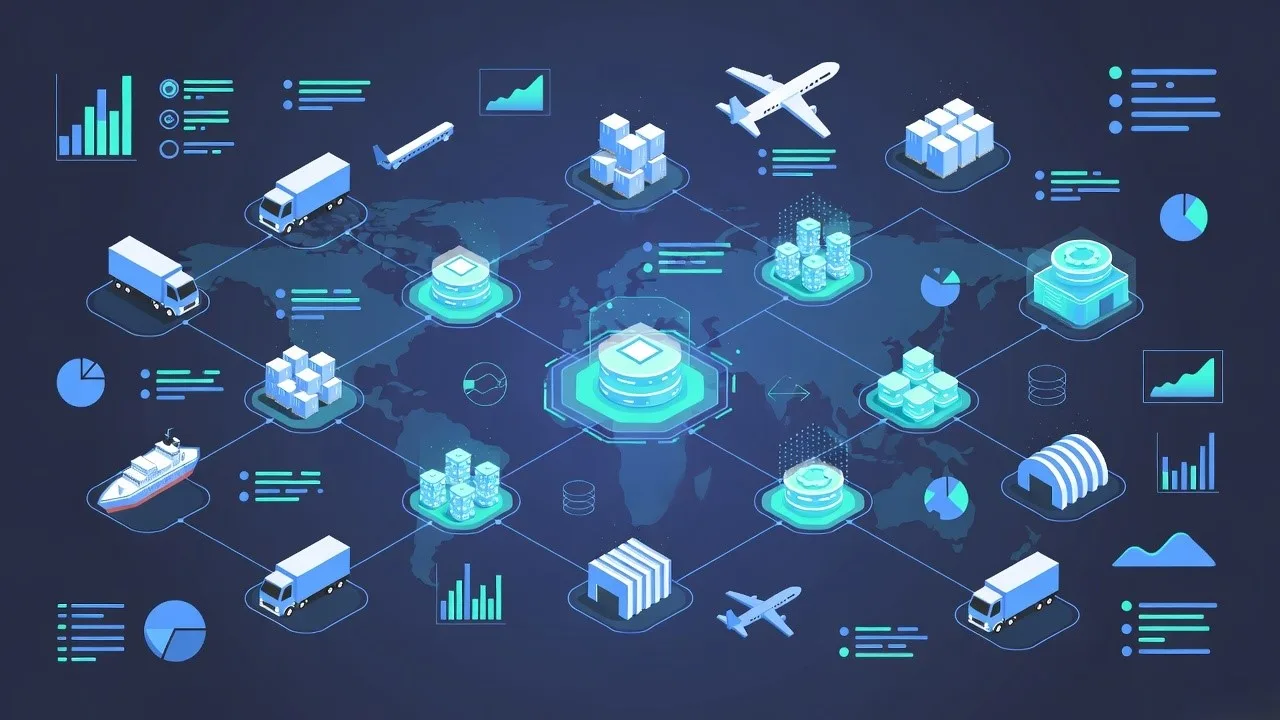
Think of the last time you were at an airport. The air traffic control tower doesn’t just watch planes; it orchestrates every movement on the tarmac and in the sky to ensure safety and efficiency. A supply chain control tower system does the same for your logistics operations . It’s a central hub, typically cloud-based, that integrates data from every touchpoint: your suppliers, manufacturers, warehouses, and transportation channels .
It’s crucial to understand what a control tower is not. It is not just a monitoring tool or a standalone dashboard. It is not a replacement for human expertise. A true control tower is an integrated system that works with your existing ERP, TMS, and WMS, augmenting your team’s ability to interpret data and make strategic decisions . From our work deploying hundreds of AI agents, the most successful implementations are those where the technology acts as a co-pilot to an experienced logistics manager, not an autopilot.
How Control Tower Software Actually Works
The magic of a control tower lies in its continuous cycle of data processing and decision support. It moves through five key phases :
- SEE: The system answers “Where are my goods?” by providing complete, real-time visibility into the location and status of every shipment and asset.
- ANTICIPATE: Using predictive analytics, it answers “What might happen?” by forecasting potential disruptions, from weather delays to port congestion.
- UNDERSTAND: It then analyzes the implications, answering “So what?” to determine the true business impact of a potential delay or issue.
- ACT: The system provides recommended actions to answer “Now what?”, enabling your team to implement corrective measures quickly.
- LEARN: Finally, it evaluates the outcomes of actions taken to answer “Then what?”, using machine learning to continuously improve future responses.
Your Supply Chain Deserves Smarter Decisions
Talk to our experts and learn how real-time data can reduce disruptions and optimize costs.
🚀 Request a Personalized DemoThe Critical Importance of Supply Chain Control Tower Platform
Why is this technology generating so much buzz now?
The complexity of modern global supply chains has made traditional, reactive management obsolete. According to Gartner, by 2025, 50% of global large enterprises will use control towers for real-time visibility . This shift is driven by a convergence of factors that US logistics leaders feel acutely.
The pandemic was a brutal wake-up call, exposing profound weaknesses in supply chains that were overly lean and lacked transparency . Furthermore, customer expectations have irrevocably changed. End-to-end visibility is no longer a “nice-to-have” but a baseline expectation . Consumers and B2B partners alike demand accurate ETAs and proactive status updates.
In the US, specific pressures like the trucking capacity crunch, the American Trucking Associations projects a 160,000-driver shortfall by 2030, make smooth, optimized operations a competitive necessity . When truck space is tight, the ability to efficiently manage assets and dock schedules directly impacts your bottom line and service reliability.
5 Key Advantages of Supply Chain Control Tower Implementation
Moving from a reactive to a proactive operational model delivers tangible, measurable benefits. Based on the performance metrics we’ve seen from our deployments, here are the most significant advantages.
1. End-to-End Visibility and Risk Prevention
This is the foundational benefit. A control tower eliminates blind spots by providing a single, unified view of your entire supply chain, from the sourcing of raw materials to last-mile delivery . This transparency is essential for quickly identifying non-compliance, delays, or other exceptions, allowing you to contain losses and implement corrective measures before a minor issue becomes a critical failure .
2. Significant Cost Reduction and Efficiency Gains
The financial impact is substantial. Research from Accenture quantifies that companies with advanced control towers can reduce logistics costs by 3-5% and improve labor efficiency by 10-20%.
In practice, we see this through:
- Reduced Detention & Demurrage: Instant alerts for schedule deviations help avoid costly fees. Some companies report 10-20% less in detention fees .
- Optimized Inventory: With better demand forecasting and visibility, companies can reduce excess inventory and associated holding costs .
- Lower Freight Costs: A Capgemini case study found dynamic rerouting enabled by control towers can lead to up to 30% lower freight costs .
3. Enhanced Agility and Disruption Response
Modern control towers are not just about visibility; they are about turning that awareness into action . When a disruption occurs—whether a port strike, a supplier shortage, or a sudden demand spike—the system helps you assess the impact, weigh response options, and orchestrate a coordinated reaction across your network. This agility is what separates resilient companies from those that are constantly firefighting.
4. Improved Customer Service and Satisfaction
A control tower empowers you to make more reliable promises to your customers and keep them. With accurate, predictive ETAs and real-time tracking, you can proactively inform customers of delays and manage expectations . This transparency builds trust and loyalty, directly contributing to a better customer experience.
5. Data-Driven Decision Making and Collaboration
Instead of relying on gut feelings or outdated spreadsheets, your team can make decisions backed by real-time data and AI-driven insights . The control tower becomes a central platform for collaboration, breaking down silos between internal teams (logistics, inventory, sales) and external partners (suppliers, carriers, 3PLs) . Everyone operates from the same, single source of truth.
A Look at the Evolving Ecosystem: Top Control Tower Solutions
The market for control tower software is diverse, with solutions ranging from broad enterprise platforms to specialized tools. The right choice depends entirely on your company’s specific needs, size, and existing tech stack.
Building a More Resilient Future for US Logistics
The journey from reactive data consumer to proactive supply chain master is not just about adopting new software. It’s about embracing a new operational philosophy centered on visibility, intelligence, and agility. The advantages of a supply chain control tower, from hard cost savings to unparalleled resilience are too significant to ignore in today’s volatile market.
The goal is not merely to see your supply chain but to understand and command it. This is where the true power of AI comes in. At Nunar, our focus is on embedding specialized AI agents into these control tower environments to handle specific, high-volume tasks from automated exception management to dynamic carrier selection freeing your human experts to focus on strategic oversight.
The question for US logistics leaders is no longer if you need a control tower, but how to build one that fits your unique operational DNA.
People Also Ask
Can small to mid-sized US logistics companies benefit from a control tower?
Yes. Modern, cloud-based solutions have made this technology accessible and affordable beyond giant corporations . Small businesses can achieve real-time visibility and better inventory control without massive IT investments, helping them compete more effectively.
What’s the difference between a control tower and basic supply chain visibility?
Visibility is about seeing what is happening. A control tower uses that visibility to understand, anticipate, and act. As Blue Yonder notes, “visibility is just the first step.” A control tower provides the decision support and orchestration capabilities to respond effectively to what you see
How long does it take to implement a control tower?
Implementation times vary widely based on the solution’s scope and complexity. Some providers, like C3 Solutions, emphasize fast implementation and a proven ROI that can be realized in weeks . Broader, enterprise-wide platforms may require a more phased, long-term rollout.
What are the biggest challenges in adopting this technology?
Common hurdles include integrating with legacy systems, ensuring clean and high-quality data inputs, and overcoming internal resistance to new workflows . Success requires not just technology, but also organizational buy-in and a willingness to adapt processes.
How is AI transforming control towers?
AI and machine learning are the engines of the modern control tower. They move the system from passive tracking to proactive problem-solving by predicting disruptions, optimizing inventory and routes automatically, and learning from past decisions to continuously improve recommendations.
NunarIQ — The All-in-One AI Agent Platform Driving Efficiency, Precision, and Growth
NunarIQ equips GCC enterprises with AI agents that streamline operations, cut 80% of manual effort, and reclaim more than 80 hours each month, delivering measurable 5× gains in efficiency.
Industries
- Logistics
- Retail
- Manufacturing
- Healthcare
- Finance
- Energy & Resources
Resources
- Blogs
- Whitepaper
- Knowledge Base
- AI Agent Requirement Analysis