
Table of Contents
The End-to-End Advantage: Why Supply Chain Visibility Platforms Are Non-Negotiable
In the hyper-competitive, post-disruption global market, the greatest enemy of profit is uncertainty. Where is the container? When will the raw materials arrive? Why is the truck idling?
For decades, these questions were answered with speculation, fragmented spreadsheets, and frantic phone calls. Today, the answer is a single, integrated digital layer: the Supply Chain Visibility Platform (SCVP).
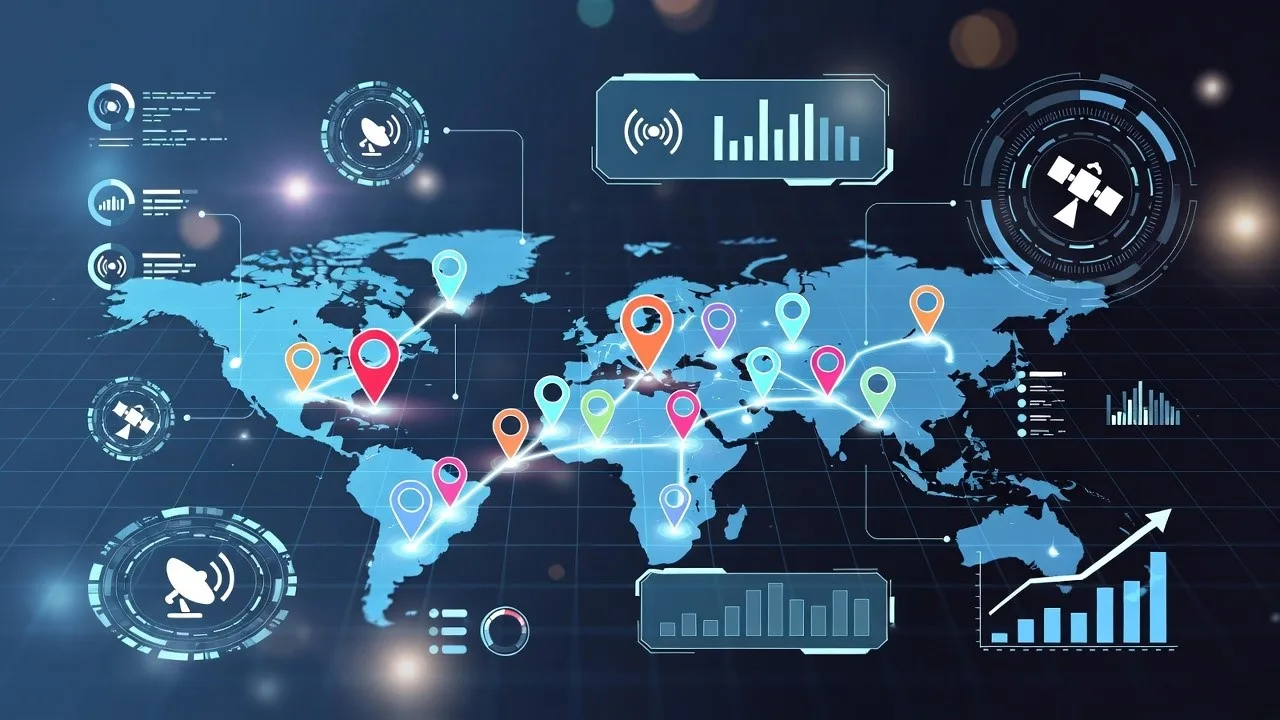
An SCVP is not merely a tracking system; it is the central nervous system of your logistics network. It fuses data from every point, from the supplier’s warehouse floor to the customer’s doorstep, to provide a single, unified, and predictive view. This shift from blind faith to absolute transparency is the most powerful commercial lever a business can pull, transforming the supply chain from a reactive cost center into a resilient, intelligent, and highly optimized strategic asset.
Implementing modern supply chain visibility solutions is no longer optional; it is the foundational requirement for resilience, customer satisfaction, and profitable growth.
The Mechanics: How Supply Chain Visibility Technology Works
Achieving true end-to-end visibility requires more than just a single GPS sensor. It demands the sophisticated aggregation and interpretation of data from thousands of disparate sources.
1. Data Aggregation: The Universal Translator
The core function of an SCVP is to ingest data from every stakeholder involved in the product’s journey:
- Carrier Telematics: Data feeds from thousands of carriers (trucks, rail, ocean, air) via APIs (Application Programming Interfaces) and Electronic Logging Devices (ELDs).
- Enterprise Systems: Integration with internal software like your ERP (Enterprise Resource Planning), TMS (Transportation Management System), and WMS (Warehouse Management System).
- Physical Tracking Devices: Real-time location and condition data from IoT sensors (tracking temperature, humidity, shock) and RFID tags placed on assets and cargo.
The SCVP acts as the central control tower, normalizing this messy, multi-format data into a clean, unified feed.
2. Predictive Analytics: The Intelligence Layer
Raw data is useful; predictive insight is invaluable. Modern SCVPs leverage AI and Machine Learning (ML) to turn real-time data into foresight:
- Predictive ETAs (P-ETAs): Unlike a static GPS ETA, a P-ETA uses ML to factor in over a hundred variables—current traffic, weather forecasts, port congestion, historical carrier performance—to provide a highly accurate estimate of arrival time, constantly updated.
- Anomaly Detection: Algorithms continuously scan the network for unusual patterns (e.g., a truck idling too long, a container dwelling unexpectedly at a port) and proactively trigger an alert before the delay becomes a disaster.
The Commercial Imperative: Top SCV Use Cases
The ROI of supply chain visibility technology is realized across every major cost and revenue line of the business.
1. Reducing Detention and Demurrage Costs
This is one of the most immediate and quantifiable savings. Detention (truck waiting time) and demurrage (port/rail container storage fees) costs millions annually for large shippers, often incurred because the receiver was unaware of the actual arrival time.
- The SCV Solution: By providing highly accurate, real-time P-ETAs, the SCVP allows warehouses and receiving docks to schedule labor and allocate dock doors precisely. This minimizes driver wait times and eliminates punitive fees. Companies often report detention cost reductions exceeding 20%.
2. Boosting Customer Satisfaction and Retention
In the Amazon era, customers demand transparency. The SCVP allows you to transform customer service from reactive damage control to proactive communication.
- The SCV Solution: Proactive alerts notify customers of delays before they ask. Customer-facing tracking portals, powered by SCVP data, offer the same level of granular detail a manager sees. Studies show that proactive communication in the face of a disruption significantly increases customer trust and retention.
3. Risk Mitigation and Resilience
In a world of constant geopolitical and environmental volatility, the SCVP is your digital insurance policy.
- The SCV Solution: Visibility extends to your Tier 2 and Tier 3 suppliers. By knowing where critical components are, the system allows managers to simulate disruption scenarios (e.g., “If Port A shuts down, what is the impact on Production Line B?”). This enables companies to proactively reroute shipments, switch suppliers, and minimize the financial impact of a disruption by up to 50%.
4. Improving Operational Efficiency and Productivity
Without visibility, logistics teams are forced into “track-and-trace” firefighting—spending hours calling carriers and emailing stakeholders.
- The SCV Solution: The SCVP automates all tracking, freeing up logistics staff to focus on higher-value activities like strategic planning and exception management. This leads to substantial gains in team productivity and lower labor overheads.
5. Inventory Optimization and Working Capital
Knowing the precise, real-time location of inventory “in motion” is just as important as knowing what’s in the warehouse.
- The SCV Solution: Accurate P-ETAs reduce the need for excessive safety stock buffers. If you know a shipment is arriving reliably in 7 days, you don’t need to hold 14 days of safety stock. This frees up working capital tied up in excess inventory, leading to a leaner, more financially efficient operation.
The Major Players: Top SCV PlatformsContainer Logistics Management
The market is currently dominated by specialized platforms that focus intensely on transportation visibility and advanced data analytics:
- project44 / FourKites: These are the market leaders in Real-Time Transportation Visibility Platforms (RTTVPs), offering multi-modal tracking (ocean, air, road, rail) and leveraging patented AI for superior P-ETA accuracy and predictive exception management. They are essential for complex, international shippers.
- Shippeo: Known for its comprehensive multimodal visibility network and focus on integrating with a wide range of TMS and telematics systems across Europe and beyond.
- E2open: Focuses on multi-enterprise collaboration and planning, using visibility to enable collaborative planning among a network of partners (suppliers, manufacturers, distributors).
The best choice depends on a company’s specific needs—whether the priority is deep integration with existing SAP/Oracle systems or achieving the highest-fidelity real-time tracking across global freight networks.
See Everything, Win Everywhere
In a transparent world, the lack of supply chain visibility is an intolerable handicap. The Supply Chain Visibility Platform is the strategic investment that closes the information gap, converting raw data into actionable intelligence.
By giving you the ability to see your entire network, predict disruptions, and act before consequences materialize, SCVPs empower you to deliver value reliably, reduce systemic costs, and secure a decisive competitive advantage in the digital logistics age. The investment in visibility is, quite simply, an investment in certainty and profit.
People Also Ask
What is a Supply Chain Visibility Platform (SCVP)?
It is a centralized software platform that collects, aggregates, and interprets real-time data from all sources (carriers, sensors, ERPs) to provide a single, unified, end-to-end view of the location and status of all inventory and shipments.
How does SCV technology reduce detention and demurrage costs?
SCVPs provide highly accurate Predictive ETAs (P-ETAs) to receivers. This allows for precise scheduling of dock labor and truck arrivals, minimizing costly driver wait times (detention) and port storage fees (demurrage).
What is the difference between a static ETA and a Predictive ETA?
A static ETA is based on fixed distance and speed. A P-ETA uses AI/ML to continuously process external data (traffic, weather, port congestion) to forecast the actual arrival time, drastically improving accuracy and reliability.
How does SCV help with supply chain risk?
It identifies anomalies and potential disruptions proactively. By providing real-time location and status, it enables managers to quickly reroute shipments or source alternative supply before a delay impacts production or customer delivery.
Do SCV solutions replace a company’s TMS or WMS?
No. SCV solutions act as a data layer (or Control Tower). They integrate with and pull data from existing systems (TMS, WMS, ERP) to enhance visibility and prediction across the entire network, without replacing the execution systems themselves.
NunarIQ — The All-in-One AI Agent Platform Driving Efficiency, Precision, and Growth
NunarIQ equips GCC enterprises with AI agents that streamline operations, cut 80% of manual effort, and reclaim more than 80 hours each month, delivering measurable 5× gains in efficiency.
Industries
- Logistics
- Retail
- Manufacturing
- Healthcare
- Finance
- Energy & Resources
Resources
- Blogs
- Whitepaper
- Knowledge Base
- AI Agent Requirement Analysis