
Table of Contents
The End of the Black Box: Why Supply Chain Visibility Software Defines Commercial Success
In the complex theater of global commerce, the greatest source of risk and wasted capital is the unknown. Where is the critical component? When, precisely, will the container arrive? Why is the delivery window slipping?
For too long, the answer involved fragmented data, frantic phone calls to carriers, and the inevitable costly surprise. Today, the world’s most resilient and profitable companies have replaced this reactive chaos with a single source of truth: the Supply Chain Visibility Platform (SCVP), often referred to as Supply Chain Visibility Software.
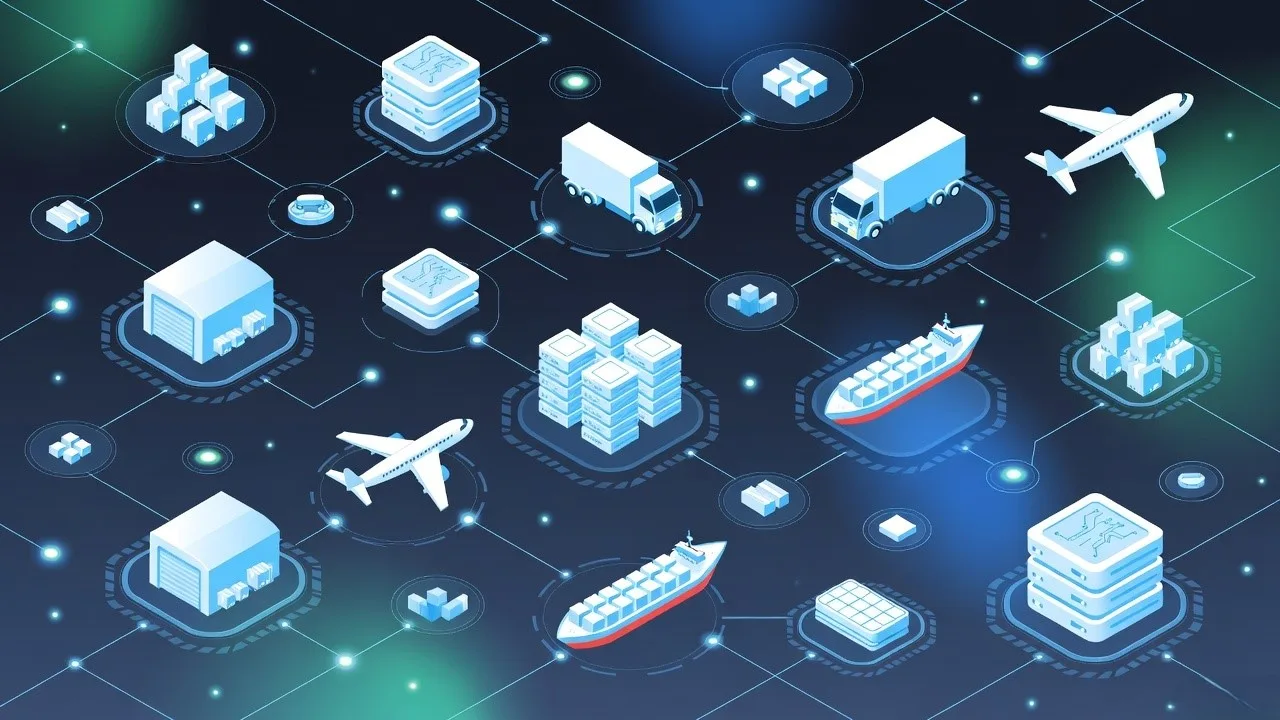
An SCVP is the central nervous system of modern logistics. It is the intelligent, unified layer that transforms data from thousands of sources, from the supplier’s warehouse floor to the customer’s doorstep, into predictive, actionable insight. This shift from blind faith to absolute transparency is the most powerful commercial lever a business can pull, guaranteeing operational resilience, bolstering customer loyalty, and securing profitable growth.
Implementing sophisticated supply chain visibility software is no longer a luxury, it is the foundational requirement for thriving in the dynamic global market.
The Visibility Gap: Why Traditional Systems Fail
The traditional supply chain architecture created inevitable “blind spots” due to a reliance on fragmented systems:
- Siloed Data: Information is trapped within separate operational systems: the ERP handles finance, the WMS handles inventory, and the TMS handles freight booking. No single system has a real-time, end-to-end view.
- Reliance on EDI/Static Updates: Many companies still rely on outdated Electronic Data Interchange (EDI) or manual updates, which provide delayed, snapshot views of events that have already occurred. This is useless for proactive management.
- Tier-1 Myopia: Visibility typically stops at the direct (Tier 1) supplier, leaving companies exposed to catastrophic failures in their secondary or tertiary suppliers (Tier 2/Tier 3), as painfully demonstrated by recent global disruptions.
Modern supply chain visibility solutions bridge this gap by prioritizing real-time data aggregation and predictive intelligence over static reporting.
The Mechanics: How SCV Platforms Deliver Intelligence
The efficacy of modern visibility software rests on its ability to fuse, interpret, and predict using vast amounts of data.
1. Unified Data Aggregation: The Universal Translator
The core function of an SCVP is to ingest and normalize data from every touchpoint in the supply chain:
- Carrier Connectivity: Seamless, real-time API integrations with thousands of global carriers (ocean, air, rail, LTL/FTL trucking).
- System Integration: Bi-directional connections with internal enterprise systems (ERP, WMS, TMS) and external partner systems (3PLs, customs brokers).
- IoT & Telematics: Ingestion of granular, continuous data from physical devices like GPS trackers, temperature/shock sensors, and electronic logging devices (ELDs).
By acting as the central Control Tower, the SCVP resolves data conflicts, standardizes disparate formats, and creates a Single Source of Truth (SSOT) for all supply chain events.
2. Predictive Analytics: The Foresight Engine
Raw location data is useful; predictive foresight is invaluable. SCVPs leverage AI and Machine Learning (ML) to convert real-time data into future outcomes:
- Predictive ETAs (P-ETAs): The system uses ML to analyze hundreds of variables current traffic, weather forecasts, port congestion, customs clearance patterns, and historical carrier reliability to provide a highly accurate, constantly updating Predicted Estimated Time of Arrival. This is a dramatic upgrade over static GPS calculations.
- Anomaly Detection: AI algorithms continuously scan the network for subtle deviations from the plan (e.g., a truck idling too long in an unscheduled area, a vessel slowing down unexpectedly) and automatically trigger a proactive alert before the deviation escalates into a major delay.
3. Collaboration Layer: Sharing the Truth
The platform provides a secure, shared environment where all stakeholders, procurement, logistics, sales, and the end customer can access the same verified, real-time data. This transparency reduces disputes, eliminates redundant communication, and speeds up decision-making.
The Commercial Imperative: SCV as a Profit Lever
Investing in top-tier supply chain visibility software yields immediate and compounding ROI across key business functions.
A. Maximizing Working Capital and Inventory
Visibility directly reduces the need for costly inventory safety buffers.
- Inventory Optimization: When shippers rely on high-fidelity P-ETAs, they can trust the arrival date. This allows them to run leaner operations, reduce safety stock requirements, and free up millions in working capital that was previously tied up in excess inventory.
- Reduced Expediting: Knowing that a shipment will be delayed a day in advance allows managers to proactively adjust production or distribution plans, avoiding the high cost and fees associated with last-minute expedited air freight or rush shipments.
B. Eliminating Costly Penalties and Fees
The single largest source of unplanned cost in logistics often stems from miscommunication at receiving points.
- Detention and Demurrage: By providing highly accurate, real-time notifications of an arrival time, the SCVP allows warehouses to schedule labor and allocate dock doors precisely. This minimizes the time a driver spends waiting (detention) and avoids punitive port/rail storage fees (demurrage), often saving 20% or more on these line items.
C. Securing Customer Loyalty (The Last Mile)
Customer expectations are non-negotiable. Visibility ensures promises are kept, or communicated proactively when they cannot be.
- Proactive Communication: The SCVP flags potential delays hours or days in advance, enabling the sales or customer service team to notify the client before they even realize there’s a problem. This transparent communication builds trust and significantly boosts customer retention and satisfaction scores.
- Enhanced Service Level Agreements (SLAs): Reliable P-ETAs help companies meet contractual SLAs with greater consistency, avoiding penalties and securing renewal contracts.
D. Risk Mitigation and Business Continuity
The SCVP is your digital insurance against external shocks.
- Tier-N Mapping and Risk Scoring: Modern platforms go beyond Tier 1, mapping the extended supply network. They use AI to analyze geopolitical news and weather patterns, assigning a dynamic risk score to every lane and every supplier.
- Scenario Planning: If a major port closes, the SCVP instantly provides alternative routing options, factoring in cost, time, and downstream impact, enabling rapid execution of a tailored business continuity plan.
Choosing the Right Visibility Solution
When evaluating supply chain visibility software, look beyond the map interface. Prioritize platforms that offer:
- Network Depth: The ability to integrate with a high number of global carriers and logistics partners.
- Predictive Accuracy: Proven, independently verified P-ETA accuracy across multiple transport modes.
- Actionable Integration: Seamless, bi-directional APIs that write data back to your ERP/TMS to automatically adjust inventory or finance records.
- Condition Monitoring: Integration with IoT sensors to track the physical integrity of goods (temperature, shock, humidity), essential for cold chain and high-value cargo.
The investment in a unified SCVP platform is an investment in strategic intelligence. It empowers businesses to move out of the reactive, costly “black box” and into an era of predictive, resilient, and profitable logistics.
People Also Ask
What is the primary commercial benefit of a Supply Chain Visibility Platform (SCVP)?
The primary benefit is reducing uncertainty and optimizing working capital. SCVPs provide the predictive data needed to reduce inventory buffers, minimize costly expediting, and eliminate penalties like detention and demurrage fees.
How does visibility software achieve a “Predictive ETA” (P-ETA)?
It uses AI and Machine Learning (ML) to analyze thousands of external, real-time variables (weather, traffic, port congestion) alongside historical carrier data to forecast the actual arrival time, which is more accurate than static GPS data.
Does SCV software replace a company’s existing TMS or WMS?
No. SCV software acts as an intelligent data aggregation and integration layer. It pulls data from and sends predictive insights back to existing systems (ERP, TMS, WMS) to enhance their functionality, not replace them.
What is “Tier-N Mapping,” and why is it important for resilience?
Tier-N Mapping extends visibility beyond the direct (Tier 1) supplier to include their suppliers (Tier 2, Tier 3, etc.). This is vital for risk mitigation, as it identifies vulnerabilities deep within the supply network before a disruption can escalate.
How does the SCVP help improve customer service?
It enables proactive communication. By using predictive analytics to identify potential delays hours or days in advance, the system alerts the customer service team to notify the client before they are even aware of a problem, significantly boosting trust.
NunarIQ — The All-in-One AI Agent Platform Driving Efficiency, Precision, and Growth
NunarIQ equips GCC enterprises with AI agents that streamline operations, cut 80% of manual effort, and reclaim more than 80 hours each month, delivering measurable 5× gains in efficiency.
Industries
- Logistics
- Retail
- Manufacturing
- Healthcare
- Finance
- Energy & Resources
Resources
- Blogs
- Whitepaper
- Knowledge Base
- AI Agent Requirement Analysis