
Table of Contents
Advantages of Web Scraping in AI Agents: How U.S. Businesses Are Unlocking Real-Time Intelligence
In the data-driven economy, information is the new infrastructure. U.S. enterprises, whether in finance, retail, logistics, or tech depend on accurate, up-to-date data to stay competitive. But with billions of web pages generating new content daily, manually tracking relevant information is impossible.
That’s where web scraping integrated into AI agents becomes transformative. It turns static data collection into an automated, intelligent, and continuously adaptive process. For organizations aiming to scale digital operations, this combination is rapidly becoming a cornerstone of modern analytics and decision-making.
What Is Web Scraping in the Context of AI Agents?
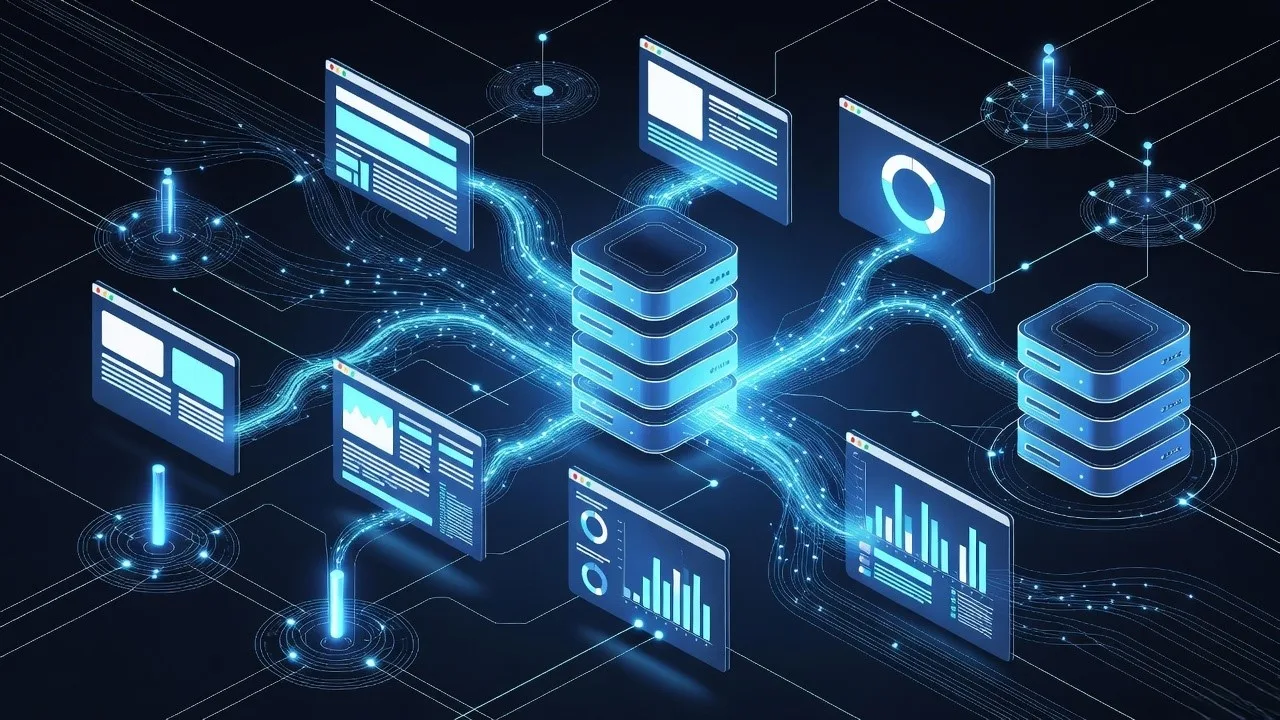
Web scraping refers to the automated extraction of structured information from websites. Traditionally, it required coding scripts to collect and clean data from specific pages. But with the rise of AI agents, autonomous, goal-oriented systems that can understand context and adapt to changing conditions web scraping has evolved into something far more powerful.
AI-powered scraping agents can:
- Understand page layouts dynamically, even when websites change structure.
- Extract data semantically, interpreting meaning rather than just text.
- Automate entire data pipelines—from extraction to cleaning, classification, and integration.
- Continuously monitor web sources in real time.
Instead of writing one-off scrapers, businesses can now deploy self-learning agents that handle end-to-end data intelligence without constant human supervision.
Why U.S. Businesses Are Turning to AI-Driven Web Scraping
The U.S. market is one of the most competitive landscapes in the world. From financial firms tracking market signals to retailers monitoring pricing trends, access to real-time external data has become essential.
AI-enabled web scraping gives U.S. enterprises a direct advantage in three major ways:
- Speed and Scalability: AI agents can extract data from thousands of web sources simultaneously. What used to take days of manual effort can now be done in minutes, continuously.
- Data Accuracy and Context: Traditional scraping tools often fail when web layouts change. AI agents use natural language processing (NLP) and computer vision to interpret data contextually, reducing noise and improving reliability.
- Operational Efficiency: Automated scraping reduces dependency on third-party data providers, lowering recurring costs and improving internal data governance.
Key Advantages of Web Scraping for AI Agents
Let’s break down the specific benefits that make AI-driven web scraping indispensable for modern enterprises.
1. Real-Time Market Intelligence
AI agents equipped with web scraping capabilities can track live updates from competitor websites, product listings, stock data, and social media. This gives decision-makers instant access to actionable insights—helping companies pivot quickly in volatile markets.
For example, a U.S.-based e-commerce company can monitor competitor pricing across hundreds of SKUs every hour and dynamically adjust its own pricing models through AI-led decision engines.
2. Automated Lead and Prospect Data Gathering
Sales and marketing teams spend enormous time identifying leads from the web. AI agents can scrape business directories, LinkedIn profiles, or corporate websites, then enrich that data with contact details and behavioral signals.
This allows U.S. B2B firms to build precise, continuously updated lead databases—fueling smarter outreach with minimal manual effort.
3. Enhanced Data for Machine Learning Models
AI models are only as good as the data that trains them. Web scraping agents can feed fresh, diverse, real-world data into models—especially valuable for natural language processing, recommendation systems, and sentiment analysis.
For instance, a financial AI model predicting investor sentiment could use scraped data from news portals, Reddit forums, and corporate filings—all curated and cleaned automatically.
4. Competitive Benchmarking and Pricing Optimization
Retail and hospitality industries in the U.S. rely heavily on competitor benchmarking. AI scraping agents can continuously collect pricing, promotions, and product availability from multiple platforms—feeding analytics systems that optimize pricing or inventory in real time.
This form of dynamic intelligence was once limited to large-scale data providers. Today, even mid-size firms can deploy AI scraping agents that deliver enterprise-grade visibility.
5. Improved Compliance and Risk Monitoring
Banks, insurance firms, and logistics companies increasingly use web scraping for compliance checks and vendor monitoring. AI agents can automatically review websites, forums, and databases to detect regulatory risks or data anomalies.
By combining scraping with machine learning classification, these systems flag noncompliant behavior or market risks long before they become costly problems.
6. Content Aggregation and Knowledge Management
In sectors such as healthcare, education, and research, AI web scrapers automate the aggregation of new publications, patents, and scientific data. Instead of relying on outdated data repositories, institutions can maintain live, centralized knowledge bases updated by autonomous agents.
The Technical Edge: Why AI Enhances Scraping
Traditional scrapers depend on static rules—like XPaths or HTML tags. When websites change, they break. AI agents use pattern recognition, NLP, and visual parsing to identify relevant content even when structure changes.
They can also:
- Handle CAPTCHAs and dynamic JavaScript rendering.
- Understand tables, infographics, and PDFs through OCR (Optical Character Recognition).
- Detect and skip irrelevant or duplicate data.
- Learn from feedback loops to improve future accuracy.
This adaptive behavior makes AI scraping more sustainable and enterprise-friendly, especially when managing thousands of target URLs.
How U.S. Enterprises Are Applying AI Scraping Across Industries
1. Finance and Investment
Investment firms use scraping agents to monitor earnings reports, press releases, and social media sentiment. Real-time analysis of these inputs can support algorithmic trading and risk modeling.
2. Retail and E-Commerce
Brands use scraping agents to monitor competitor prices, customer reviews, and market demand shifts. AI then automates re-pricing or stock management based on live market data.
3. Manufacturing and Supply Chain
Procurement teams scrape supplier websites for material prices and availability. AI agents can forecast supply risks and recommend alternative sourcing strategies.
4. Real Estate and Construction
Agents collect property listings, zoning regulations, and permit updates to identify investment opportunities or compliance risks faster than manual analysts.
5. Healthcare and Life Sciences
Pharma companies scrape clinical trial data, FDA updates, and research papers—then use NLP to summarize trends for R&D or regulatory reporting.
Compliance and Ethical Considerations
While web scraping is legal in most contexts, U.S. businesses must ensure compliance with data protection and intellectual property laws. Ethical AI scraping frameworks typically include:
- Respecting website robots.txt protocols.
- Avoiding extraction of personal or sensitive data.
- Implementing throttling and anonymization to prevent server overload.
- Maintaining audit trails for accountability.
Partnering with an experienced AI and data automation provider ensures that all scraping activities adhere to U.S. legal standards such as the Computer Fraud and Abuse Act (CFAA) and GDPR (for international data).
Future of AI Web Scraping: Autonomous Data Ecosystems
The next phase of web scraping lies in autonomous data ecosystems—where AI agents not only collect data but also analyze, interpret, and act on it.
Future AI scrapers will:
- Collaborate with other agents in real time to exchange structured insights.
- Integrate seamlessly with business intelligence platforms.
- Detect emerging market signals before human analysts can.
For U.S. enterprises, this means faster decisions, leaner teams, and truly data-driven innovation.
Final Thoughts
Web scraping was once a back-office utility. With AI agents, it’s becoming a strategic growth enabler. By automating how data is discovered, structured, and analyzed, organizations can achieve real-time intelligence at scale a critical edge in today’s fast-moving markets.
Whether you’re a financial firm seeking early signals, a retailer optimizing pricing, or a logistics company tracking supply trends, AI-driven web scraping delivers the precision and speed your data teams need.
For U.S. enterprises building AI-first infrastructure, integrating web scraping into AI agent workflows is no longer optional, it’s the foundation for smarter, faster, and more resilient business intelligence.
People Also Ask
What is web scraping?
Web scraping is the automated process of extracting data from websites to collect valuable information for analysis, research, or business use.
What are the main advantages of web scraping?
It enables large-scale data collection, saves time, improves accuracy, and provides real-time insights for competitive and market analysis.
How does web scraping help businesses?
Businesses use web scraping to track competitors, monitor pricing, gather customer feedback, and identify market trends efficiently.
Can web scraping improve decision-making?
Yes, it provides timely and structured data that supports informed strategic decisions and predictive analytics.
What technologies are commonly used for web scraping?
Popular tools include Python libraries like BeautifulSoup, Scrapy, and Selenium for automating and managing data extraction tasks.
NunarIQ — The All-in-One AI Agent Platform Driving Efficiency, Precision, and Growth
NunarIQ equips GCC enterprises with AI agents that streamline operations, cut 80% of manual effort, and reclaim more than 80 hours each month, delivering measurable 5× gains in efficiency.
Industries
- Logistics
- Retail
- Manufacturing
- Healthcare
- Finance
- Energy & Resources
Resources
- Blogs
- Whitepaper
- Knowledge Base
- AI Agent Requirement Analysis