
Table of Contents
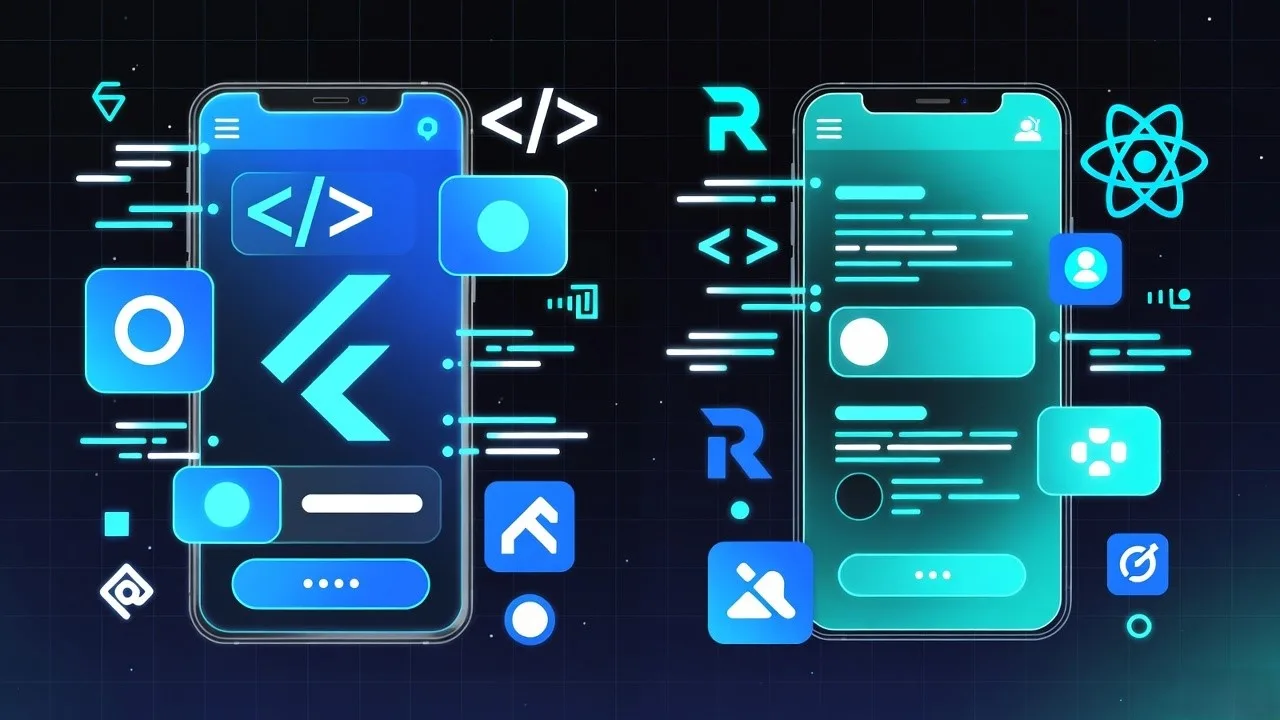
Flutter vs React Native: Which Is Better for Your Next Mobile App in 2025?
When it comes to mobile app development, two frameworks dominate the conversation, Flutter and React Native. Both promise fast development, cross-platform compatibility, and near-native performance. But if you’re a business leader or startup founder in the United States trying to choose between them, understanding their real differences can save you time, money, and long-term headaches.
Let’s break it down clearly, without the jargon.
What Is Flutter?
Flutter is Google’s open-source framework for building mobile, web, and desktop applications from a single codebase. It uses the Dart programming language, known for its speed and clean syntax.
Flutter’s key strength lies in its UI consistency. It renders every component, buttons, text, animations—using its own high-performance engine, which means your app will look and behave the same across iOS and Android.
Used by: Google, BMW, eBay Motors, and Alibaba.
What Is React Native?
React Native, created by Meta (Facebook), is a popular framework that allows developers to use JavaScript and React to build mobile applications. Unlike Flutter, React Native bridges JavaScript code with native modules, meaning parts of your app use actual native components.
This often results in apps that “feel” more native on each platform but can sometimes lead to inconsistencies if not carefully optimized.
Used by: Instagram, Tesla, Walmart, and Pinterest.
Key Differences Between Flutter and React Native
| Feature | Flutter | React Native |
|---|---|---|
| Owner | Meta (Facebook) | |
| Programming Language | Dart | JavaScript |
| Performance | Faster (compiled to native ARM code) | Slightly slower (uses a JavaScript bridge) |
| UI Consistency | Same look across iOS and Android | Adapts to platform-specific UI |
| Community Support | Rapidly growing but smaller | Large and mature developer community |
| Learning Curve | Moderate (requires Dart learning) | Easier (uses familiar JavaScript/React) |
| Third-Party Plugins | Growing ecosystem | Extensive plugin availability |
| Hot Reload | Yes | Yes |
| Best For | High-performance, visually rich apps | Projects requiring native-like UX or existing JS stack integration |
Performance and User Experience
Flutter apps generally offer smoother animations and faster rendering because of their direct compilation to native code. The absence of a JavaScript bridge eliminates potential bottlenecks.
React Native, while still fast, depends on an additional bridge to communicate with native APIs. This can introduce slight lags in complex animations or heavy computations.
For apps where performance and design precision are critical (like gaming or AR applications), Flutter often has the edge. For apps where integration and flexibility matter more (like social or eCommerce apps), React Native remains a solid choice.
Development Speed and Ecosystem
If your team already works with JavaScript or React, React Native feels instantly familiar. It integrates well with existing web projects, speeding up development for companies with established front-end teams.
Flutter, on the other hand, offers a more controlled environment. Its rich widget library and Google-backed ecosystem allow developers to create consistent UIs faster, especially for startups starting from scratch.
Community and Support
React Native has been around longer, so it benefits from a larger developer community, third-party libraries, and ready-made components. You’ll find countless tutorials and GitHub projects that make troubleshooting easier.
Flutter’s community is newer but growing fast. Google’s consistent updates and its use in several flagship applications show strong long-term support.
Integration and Tooling
React Native offers smoother integration with existing native apps, making it ideal for hybrid environments. It also works seamlessly with development tools like Visual Studio Code and Expo.
Flutter, powered by Google’s robust Dart DevTools, offers an excellent debugging and profiling experience. The Flutter Inspector helps developers fine-tune UI layouts in real time—a big advantage for visually detailed apps.
Cost Considerations
Both frameworks reduce overall development costs since you only need one codebase for multiple platforms.
However, consider these points:
- Flutter may require hiring Dart developers (a smaller pool).
- React Native developers are more common, which can make hiring easier in the U.S. market.
- Maintenance and updates for Flutter apps are often simpler since they don’t depend on native components that break after OS updates.
Which Framework Should You Choose in 2025?
It depends on your priorities:
- Choose Flutter if:
- You want visually rich, smooth, high-performance apps.
- You’re building a product from the ground up.
- You prefer Google’s ecosystem and stable performance.
- Choose React Native if:
- Your team already knows JavaScript/React.
- You want platform-specific look and feel.
- You plan frequent updates or rapid prototyping.
Real-World Example
A U.S. retail startup building an AI-powered customer loyalty app might choose Flutter for its fast UI rendering and smooth cross-platform experience.
Meanwhile, an established eCommerce platform with a large web team might choose React Native to reuse existing JavaScript expertise and maintain design consistency with its web app.
Conclusion
Both Flutter and React Native are excellent choices for cross-platform app development. Flutter leads in performance and visual fidelity, while React Native wins in ecosystem maturity and developer availability.
For businesses in the U.S., the decision should depend on your team’s technical background, project complexity, and long-term scalability goals.
If you’re evaluating frameworks for your next mobile app, consider running a quick proof of concept with both, sometimes, the best choice comes from testing what fits your product vision.
People Also Ask
Which is faster: Flutter or React Native?
Flutter is generally faster because it compiles directly to native code, avoiding the JavaScript bridge used in React Native.
Is Flutter better for startups?
Yes. Flutter’s single codebase and visually consistent UI make it ideal for startups building apps quickly without sacrificing design quality.
Does React Native support web and desktop apps?
Yes, through React Native Web and Electron, but with limited native-like performance compared to Flutter.
Which framework has a larger developer community?
React Native currently has a larger, more mature community, though Flutter’s is growing rapidly.
Can I migrate from React Native to Flutter?
Yes, but it requires rewriting much of the codebase. Migration is possible if your long-term goals prioritize performance or unified design.
NunarIQ — The All-in-One AI Agent Platform Driving Efficiency, Precision, and Growth
NunarIQ equips GCC enterprises with AI agents that streamline operations, cut 80% of manual effort, and reclaim more than 80 hours each month, delivering measurable 5× gains in efficiency.
Industries
- Logistics
- Retail
- Manufacturing
- Healthcare
- Finance
- Energy & Resources
Resources
- Blogs
- Whitepaper
- Knowledge Base
- AI Agent Requirement Analysis